SPECIES CARE GUIDE
Gerold's Pink Toe
Avicularia geroldi
ENVIRONMENT
Core care conditions
Use these ranges as a starting point and adjust for life stage, enclosure ventilation and observed behaviour.
HUSBANDRY OVERVIEW
At a glance
- Taxonomic group
- Arachnida
- Origin
- Brazil
- Lifestyle
- Arboreal
- Adult size (diagonal leg span)
- 10–12 cm
- Temperament
- Fast
- Experience level
- Beginner+
- Visibility
- Often visible once settled; may retreat into webbed cork bark tubes
- Burrowing
- No; provide vertical cork bark, foliage and webbing anchor points
- Growth rate
- Medium
- Urticating hairs
- Yes
- Venom
- Mild
- Tarantula region
- New World
- Male lifespan
- 3–5 years
- Female lifespan
- 12–15 years
CARE NOTES
Keeping considerations
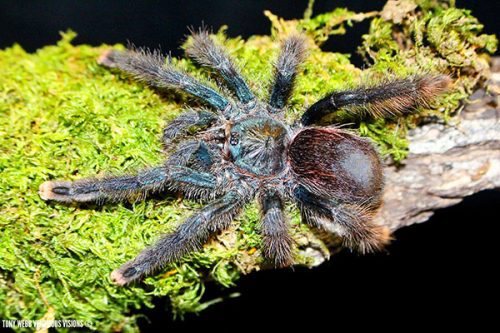
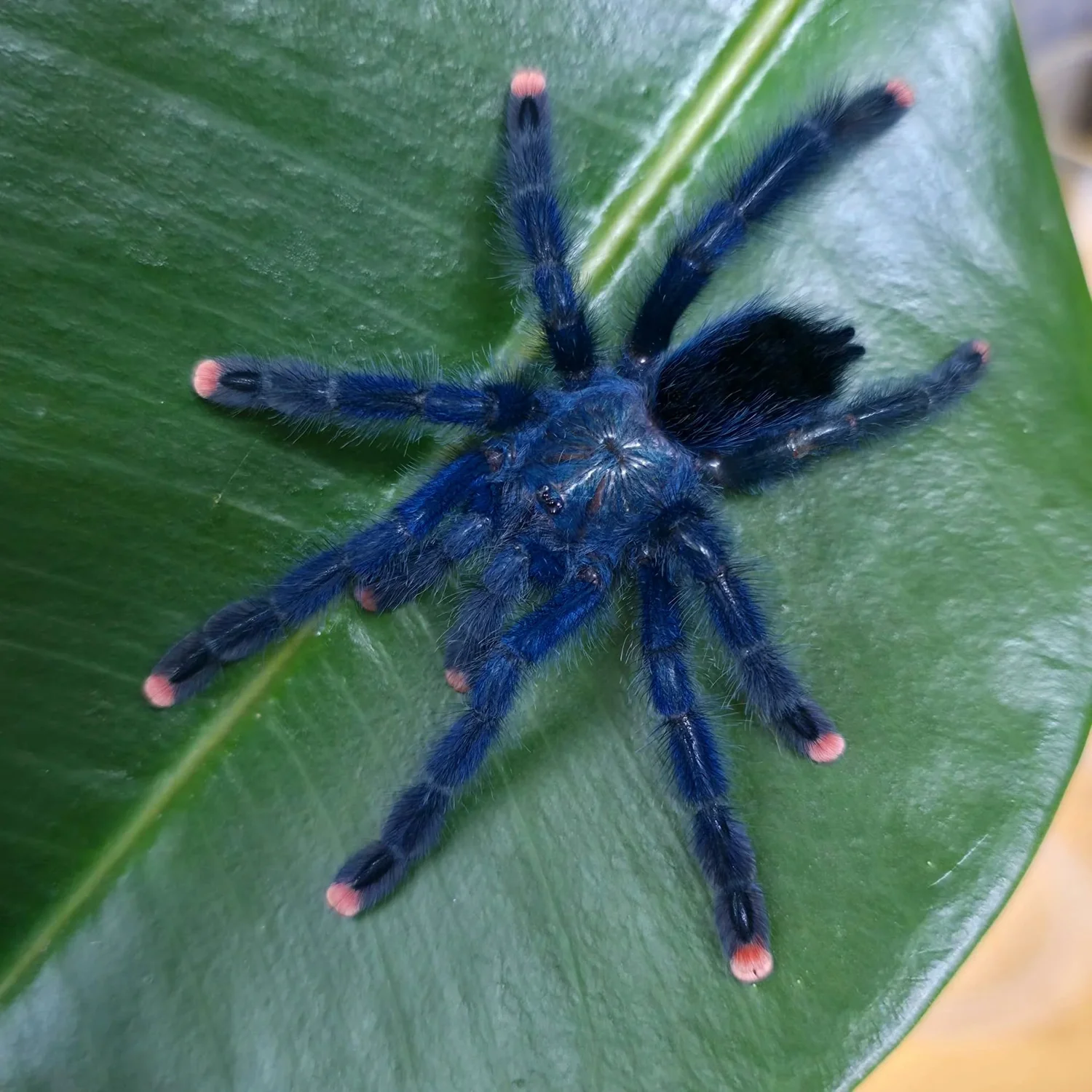
Avicularia geroldi is an arboreal New World tarantula originating from Brazil. Known for its striking blue and green sheen, this species thrives in an arboreal setup with the following care requirements: • Enclosure: Vertical setup with ample height (roughly 3x the spider's leg span), cork bark hides, vertical foliage, and secure webbing anchor points. Excellent cross-ventilation is critical to prevent stagnant, overly humid air and respiratory issues. • Temperature & Humidity: Maintain a warm ambient temperature of 24–28°C and a background humidity of 70–80%. • Hydration: Keep a shallow water dish filled with fresh water at all times. Lightly mist one side of the enclosure or overflow the water dish occasionally, allowing the substrate surface to dry out completely between waterings. Avoid constantly soaking the enclosure, as dry-out periods paired with strong airflow are key to long-term health. Care notes are based on the best available hobby husbandry information and credited source data from The Spider Shop; adjust conditions based on the individual animal, enclosure ventilation, local room temperatures and behaviour.
PRACTICAL HUSBANDRY
Day-to-day care
Diet & prey
Flies, roaches and locusts scaled appropriately to the spider's size
Feeding
Spiderlings: every 4–5 days. Juveniles: every 7 days. Adults: every 10–14 days. Remove uneaten prey promptly.
Enclosure
Arboreal vertical enclosure with a secure lid and strong cross-ventilation to prevent stagnant air. Minimum height should be roughly 3x the spider's leg span.
Substrate
5 cm of clean, moisture-retaining substrate like coco fiber or peat mix to help maintain background humidity.
Ventilation
Excellent cross-ventilation is critical for this species to prevent respiratory issues associated with stagnant, humid air.
Hydration & misting
Keep a shallow water dish filled with fresh water. Lightly mist one side of the enclosure or overflow the water dish occasionally, allowing the surface to dry out between waterings.
Handling
Generally docile but extremely quick and capable of jumping or bolting. Handling is not recommended due to the risk of a fall.
Sex differences
Mature males feature tibial hooks on the front legs and a bulbous palpal organ; females are bulkier and longer-lived.
IMPORTANT CONSIDERATIONS
Keeper notes
Prone to sudden bursts of speed, jumping, or directing defensive waste/hairs when startled. Ensure secure rehousing procedures.
BREEDING & LIFE CYCLE
Breeding notes
Introduce a well-fed female under supervision. Females typically produce a silken egg sac a few months following a successful pairing.
SOURCES & FURTHER READING
Check the references
Care can vary by species, life stage and local conditions. Review multiple reputable sources before making husbandry decisions.
KEEP EXPLORING
More Avicularia
Other completed care guides from the same scientific genus.