SPECIES CARE GUIDE
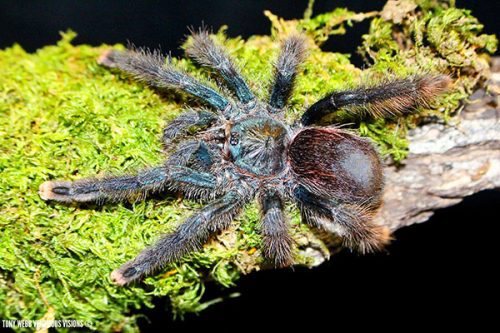
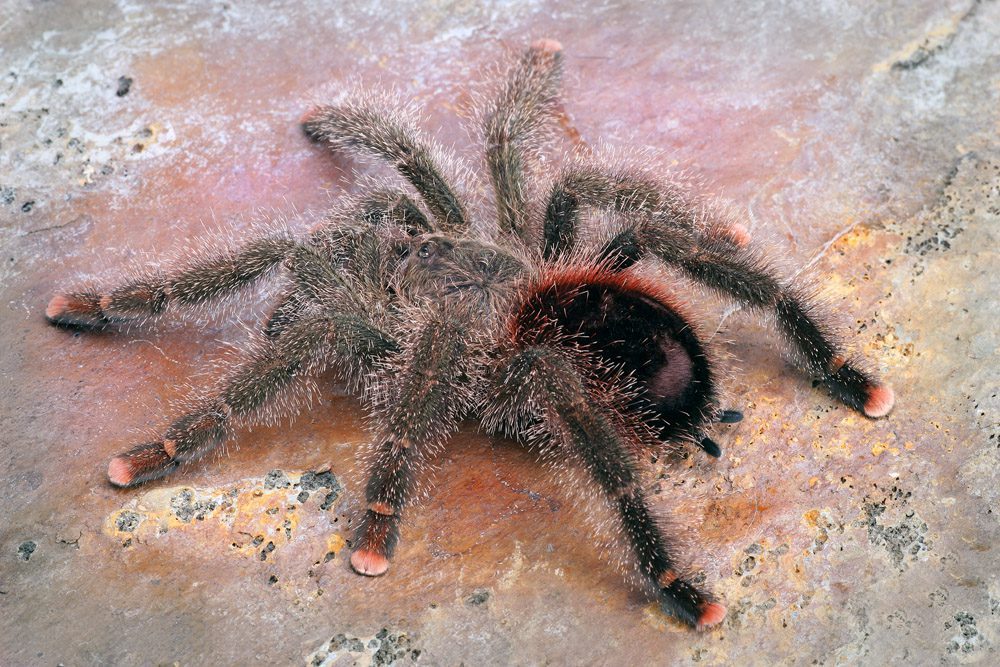
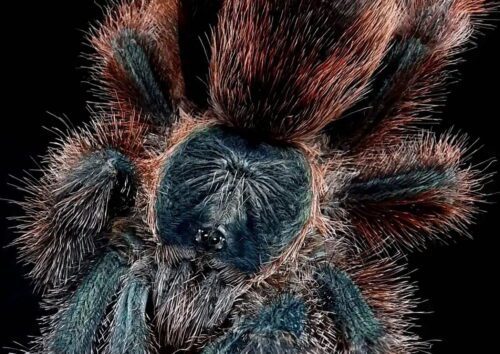
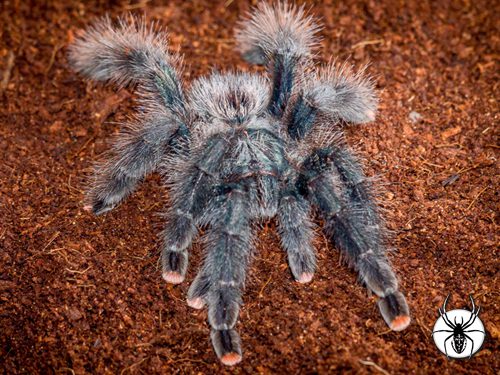
Metallic Pink Toe
Avicularia metallica
ENVIRONMENT
Core care conditions
Use these ranges as a starting point and adjust for life stage, enclosure ventilation and observed behaviour.
HUSBANDRY OVERVIEW
At a glance
- Taxonomic group
- Arachnida
- Origin
- South America (specifically Guyana, Suriname, French Guiana, and Brazil)
- Lifestyle
- Arboreal
- Adult size (diagonal leg span)
- 12–14 cm
- Temperament
- Docile but active and easily startled; prone to sudden jumps or fast bolting.
- Experience level
- Intermediate
- Visibility
- Often visible resting on web tubes or glass outside of retreats.
- Burrowing
- Does not burrow
- Growth rate
- Moderate
- Urticating hairs
- Yes
- Venom
- Mild
- Tarantula region
- New World
- Male lifespan
- 2–4 years
- Female lifespan
- 10–12 years
CARE NOTES
Keeping considerations
Classic arboreal New World species requiring warm, humid conditions balanced with immaculate cross-ventilation. Stagnant air is lethal to this genus, so high airflow combined with a reliable water dish and occasional misting is key to long-term success.
PRACTICAL HUSBANDRY
Day-to-day care
Diet & prey
Crickets, Dubia roaches, red runner roaches, and locusts.
Feeding
Slings: 1–2 small insects every 4–7 days. Adults: 1–2 appropriately sized prey items every 7–10 days. Remove uneaten prey after 24 hours.
Enclosure
Arboreal setup with greater height than floor space (e.g., minimum 20×20×30 cm for adults). Provide vertical cork bark flats/tubes and artificial or live foliage near the top to anchor web retreats.
Substrate
2–3 inches of coco coir, peat moss, or bioactive soil mix to retain slight moisture.
Ventilation
Crucial. Avicularia species require exceptional cross-ventilation to prevent stagnant, humid air, which is the leading cause of sudden death syndrome in this genus.
Hydration & misting
Keep a shallow, clean water dish accessible at all times. Lightly mist one side of the enclosure 1–2 times weekly, letting the setup dry out between mistings to prevent mold.
Handling
Generally calm temperament, but their unpredictable jumping and fast reflexes make handling risky for both handler and spider. Best kept as an observation species.
Sex differences
Mature males have tibial hooks on the front legs and bulbous palps (emboli), along with a generally leaner build. Females are stockier and live significantly longer.
IMPORTANT CONSIDERATIONS
Keeper notes
Extremely agile jumpers; they can leap unexpected distances from high anchor points when startled. Ensure top-opening or front-opening maintenance is done carefully to prevent escapes.
BREEDING & LIFE CYCLE
Breeding notes
Females build a dense silk sac for the ootheca. Courting requires caution as females can occasionally show aggression toward males.
SOURCES & FURTHER READING
Check the references
Care can vary by species, life stage and local conditions. Review multiple reputable sources before making husbandry decisions.
KEEP EXPLORING
More Avicularia
Other completed care guides from the same scientific genus.