SPECIES CARE GUIDE
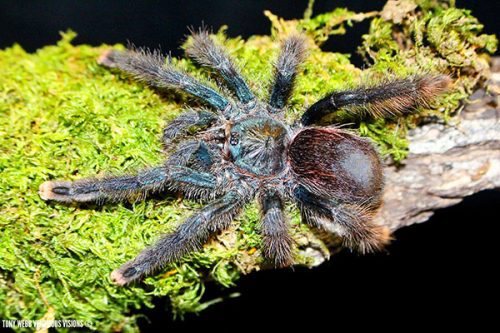
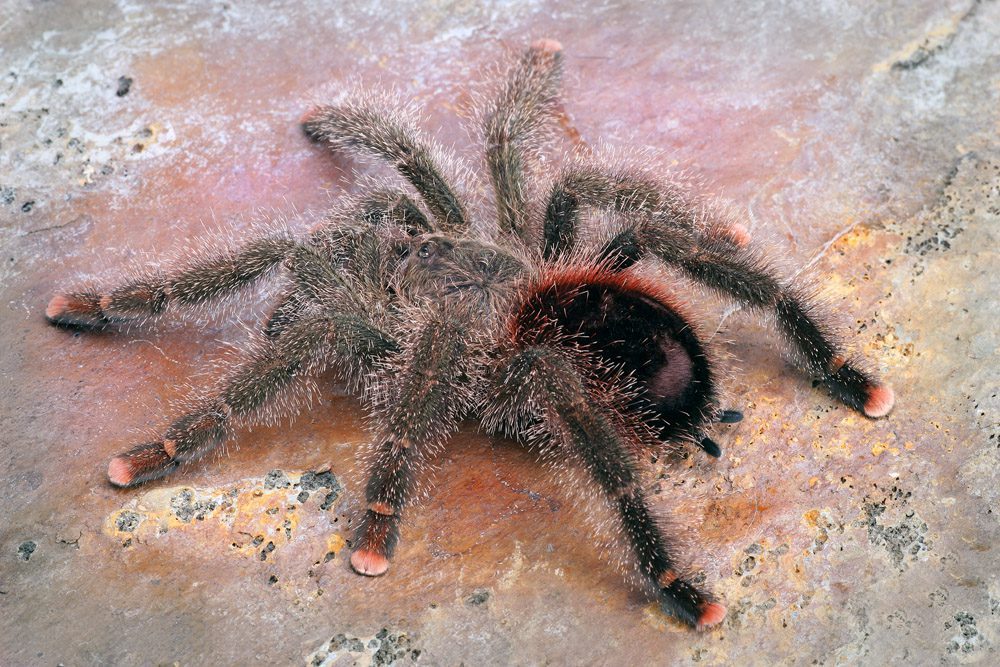
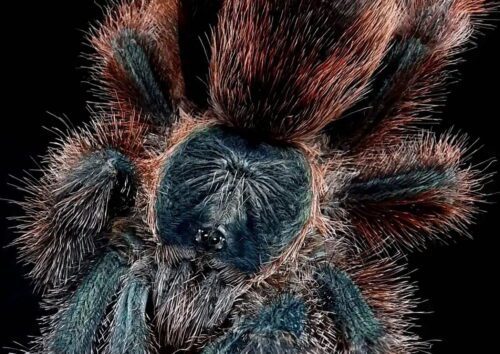
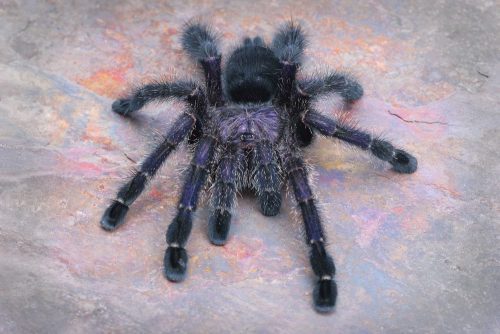
Purple pinktoe tarantula
Avicularia purpurea
ENVIRONMENT
Core care conditions
Use these ranges as a starting point and adjust for life stage, enclosure ventilation and observed behaviour.
HUSBANDRY OVERVIEW
At a glance
- Taxonomic group
- Arachnida
- Origin
- Ecuador
- Lifestyle
- Arboreal
- Adult size (diagonal leg span)
- 10 cm
- Temperament
- Docile
- Experience level
- Beginner+ / Intermediate
- Visibility
- Often visible around webbing or retreats
- Burrowing
- No; arboreal web/retreat builder
- Growth rate
- Medium
- Urticating hairs
- Yes
- Venom
- Mild to moderate
- Tarantula region
- New World
CARE NOTES
Keeping considerations
Spider Shop species info lists this as arboreal from Ecuador, with recommended temperature 20-26°C, humidity 70-80%, leg span 10 cm, disposition docile, and suitability Beginner+ / Intermediate. Use this as a husbandry snapshot and adjust enclosure details to the individual animal.
PRACTICAL HUSBANDRY
Day-to-day care
Diet & prey
Appropriately sized crickets, dubia roaches, locusts, and occasional mealworms or waxworms.
Feeding
Feed juveniles every 4–7 days and adults every 7–14 days. Always remove any uneaten live prey after 24 hours to protect the spider during molting.
Enclosure
Arboreal
Substrate
2–3 inches of coconut coir or a moisture-retentive arboreal substrate mix. Keep it slightly damp to hold humidity, but avoid soggy or waterlogged conditions.
Ventilation
Critical for this genus: Excellent cross-ventilation (top and side vents) is mandatory to prevent stagnant air, mold, and respiratory issues.
Hydration & misting
Provide a shallow water dish filled with fresh water at all times. Lightly mist one side of the enclosure or the webbing 1–2 times a week to maintain 70–80% humidity, allowing the enclosure to dry out slightly between mistings.
SOURCES & FURTHER READING
Check the references
Care can vary by species, life stage and local conditions. Review multiple reputable sources before making husbandry decisions.
Last reviewed:
KEEP EXPLORING
More Avicularia
Other completed care guides from the same scientific genus.