
Front book lungs
These are the paired pale oval areas. They give you the reliable landmarks for finding the correct region.
KEEPER SKILL
One small area of an exuvium can give a reliable answer. This guide shows exactly where to look, what a female structure looks like, and when it is best to wait for another moult.
START HERE
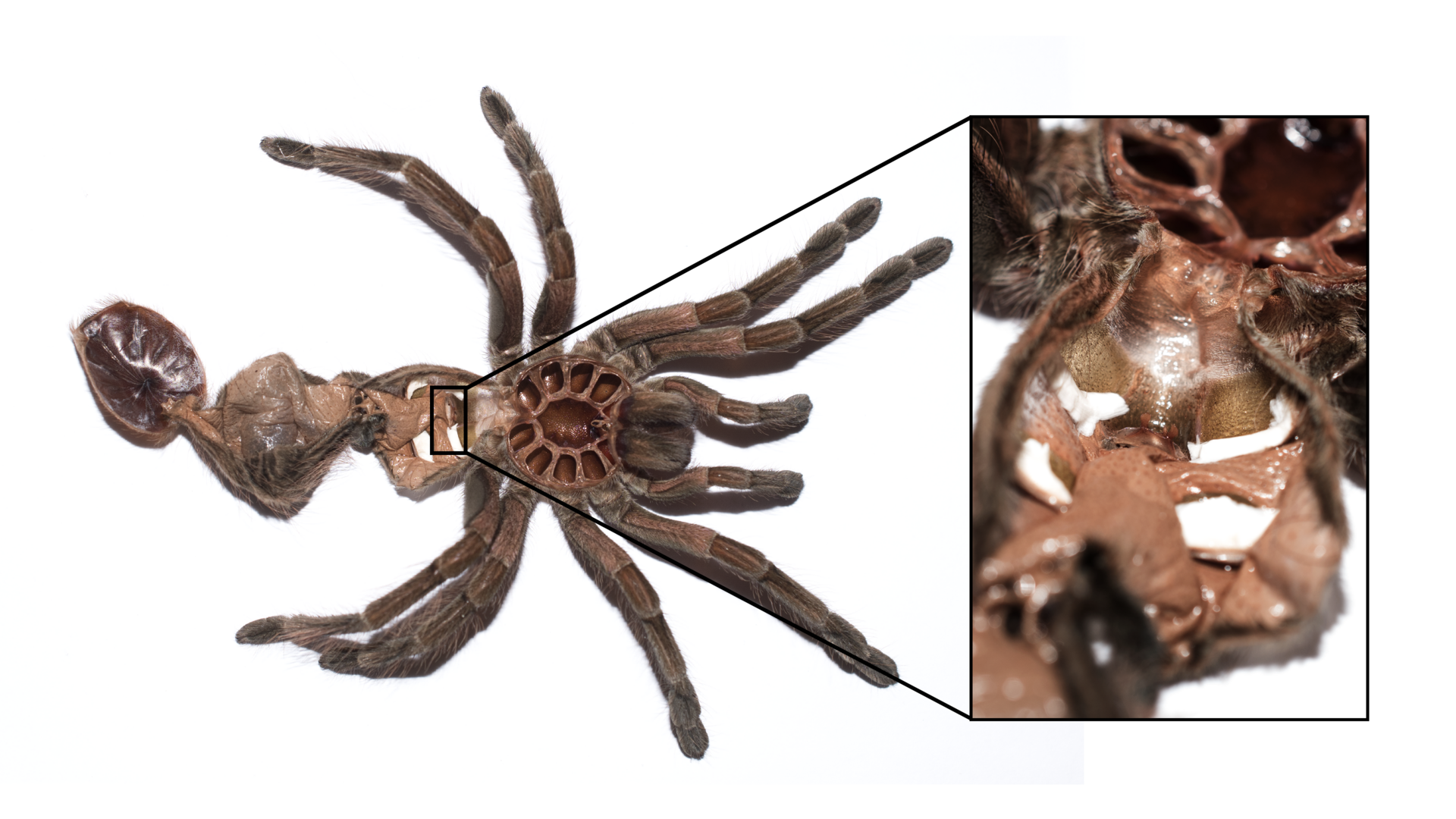
Gently open the moult so the inside faces up. Find the front pair of book lungs, then look in the small area between them: the epigastric furrow. This is the only part you need to assess.
These are the paired pale oval areas. They give you the reliable landmarks for finding the correct region.
The curved line between the front book lungs. Look just above it for female structures, or just below it for male features.
Take a close, evenly lit picture of this area. A phone camera can work well if both book lungs and the furrow are in focus.
VISUAL REFERENCE
This annotated real exuvium shows the raised spermatheca: the female structure that sits just above the epigastric furrow. Shape varies across species, but a distinct raised structure is the key.
FEMALE OR MALE?
This scientific macro reference puts the different structures side by side: the male palpal bulb on the left and the paired female spermathecae on the right. It is a mature-adult comparison; for an immature tarantula, the moult remains the best evidence.
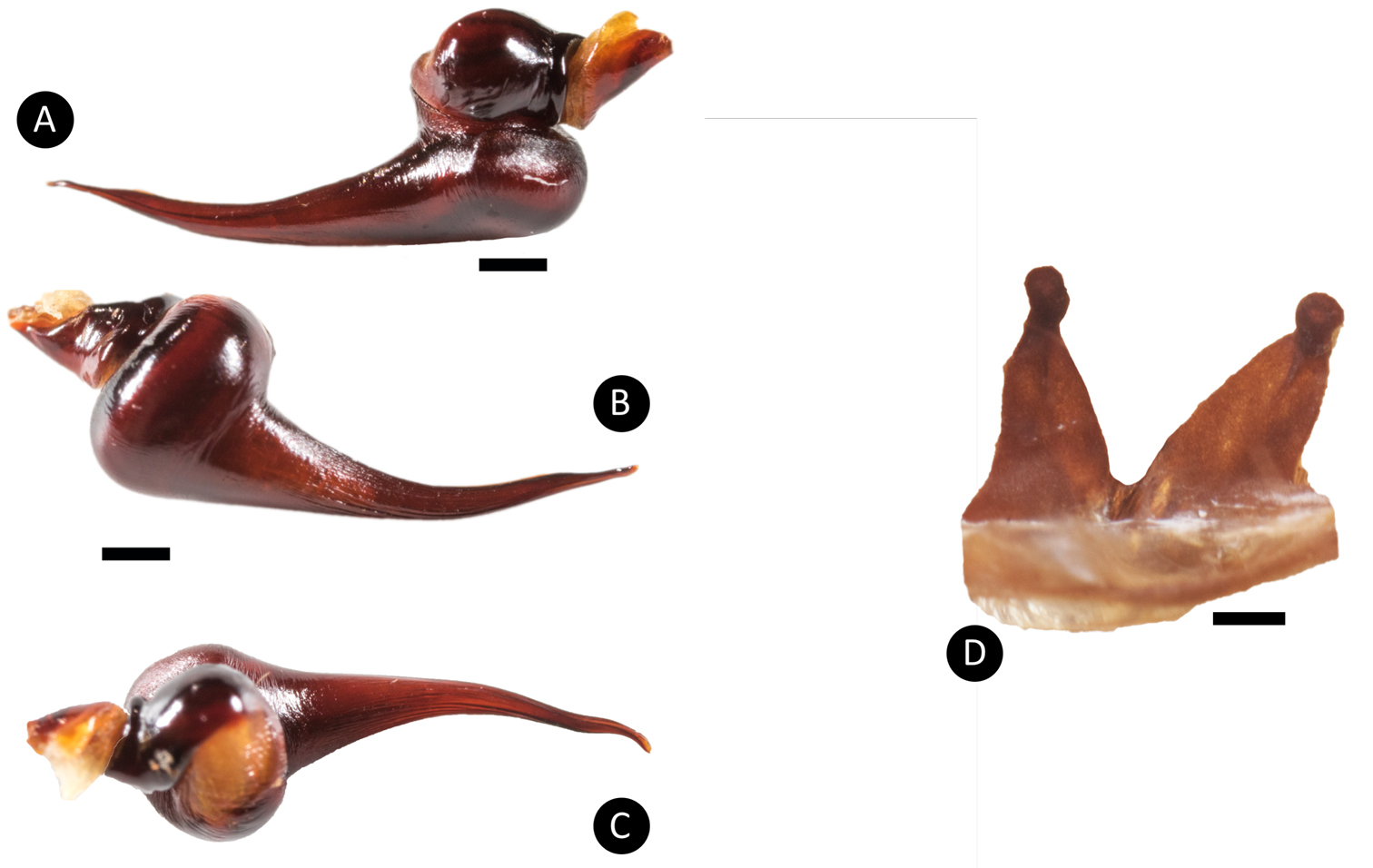
Macro anatomy plate of Tapinauchenius polybotes: male palpal bulb (A–C) and female spermathecae (D), from Hüsser (2018), CC BY 4.0 via Wikimedia Commons.
Find a raised spermatheca above the epigastric furrow: that is your positive female result.
Enlarged palpal bulbs—and, in some species, tibial hooks—can confirm a mature male. They do not identify sex in juveniles.
A missing or torn structure is not a male result. Mark it unclear and wait for a better moult.
HOW TO READ IT
Look for a firm, raised spermatheca or pair of receptacles just above the furrow. It can look like a flap, pouch or paired shape depending on the species.
A male moult has no spermatheca. In mature enough moults you may see a small patch of fine bristles, called epiandrous fusillae, below the furrow.
Very small, torn or badly folded moults can be impossible to call. Record it as unclear and check the next moult rather than forcing a result.
A FEW IMPORTANT NOTES
Do not sex from colour, size or a ventral pattern alone. These can be useful hints, but a moult is the reliable way to confirm sex.
Not seeing male features does not automatically mean female. A clean female structure is a positive sign; absence of detail may simply mean the moult is too young or unclear.
Species differ. The reference image shows the area and principle, not one exact shape every tarantula will have.