ENVIRONMENT
Core care conditions
Use these ranges as a starting point and adjust for life stage, enclosure ventilation and observed behaviour.
HUSBANDRY OVERVIEW
At a glance
- Taxonomic group
- Arachnida
- Origin
- St. Lucia / Lesser Antilles (Caribbean)
- Lifestyle
- Terrestrial/burrowing
- Adult size (diagonal leg span)
- 13-18
- Temperament
- Skittish
- Experience level
- Intermediate
- Visibility
- Secretive and tends to stay deep in burrows when young; older specimens spend more time out in the open near their burrow entrance
- Burrowing
- Heavy burrower—appreciates deep substrate to construct extensive subterranean retreats
- Growth rate
- Slow
- Urticating hairs
- Yes
- Venom
- Mild
- Tarantula region
- New World
- Male lifespan
- 3-5 years
- Female lifespan
- 15-20+ years
CARE NOTES
Keeping considerations
Ensure deep substrate is packed down slightly when first set up to give them a head start on burrowing. Keep a close eye on cross-ventilation to avoid mite flare-ups in the humid tropical setup.
PRACTICAL HUSBANDRY
Day-to-day care
Diet & prey
Crickets, roaches, locusts, and other appropriately sized live invertebrates
Feeding
Feed spiderlings every 4–7 days; sub-adults and adults every 10–14 days depending on size and condition.
Enclosure
Terrestrial setup; floor space is vastly more important than height. Minimum dimensions should be at least 3x the spider's diagonal leg span in length.
Substrate
10–15 cm (4–6 inches) of moisture-retaining, firm substrate such as a mixture of coconut fiber, peat moss, and topsoil to support burrowing.
Ventilation
Good cross-ventilation is essential to prevent stagnant air and mold growth while maintaining humidity.
Hydration & misting
Provide a shallow water dish filled with fresh water at all times. Lightly mist a portion of the enclosure or substrate weekly to maintain ambient humidity, letting it dry out slightly between mistings.
Handling
Not recommended for handling due to their skittish nature and defensive hair-flicking. Best enjoyed as a display animal.
Sex differences
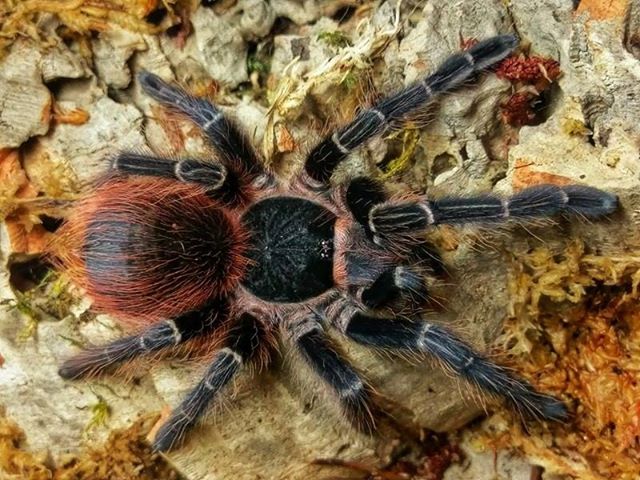
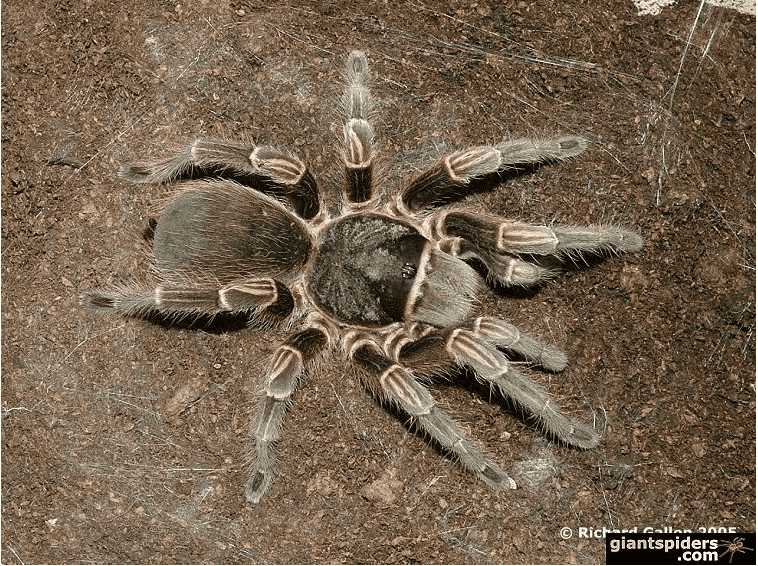
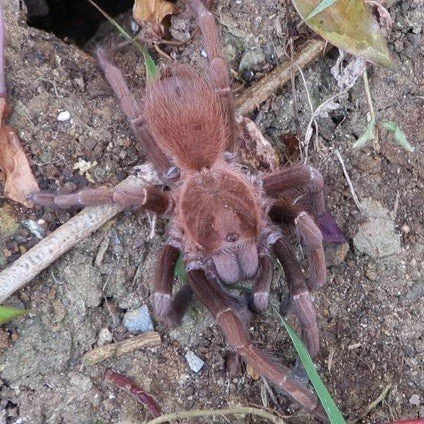
Adult males tend to have a lighter, more caramel-brown coloration with tibial hooks/spurs upon ultimate molt; females are larger, heavier-bodied, and live significantly longer.
IMPORTANT CONSIDERATIONS
Keeper notes
Possesses urticating hairs that can cause irritation to skin and eyes. Can deliver a painful defensive bite if cornered.
BREEDING & LIFE CYCLE
Breeding notes
Typical of the genus; mating can be delicate, and females construct an egg sac after a successful pairing.
SOURCES & FURTHER READING
Check the references
Care can vary by species, life stage and local conditions. Review multiple reputable sources before making husbandry decisions.
KEEP EXPLORING
More Acanthoscurria
Other completed care guides from the same scientific genus.