ENVIRONMENT
Core care conditions
Use these ranges as a starting point and adjust for life stage, enclosure ventilation and observed behaviour.
HUSBANDRY OVERVIEW
At a glance
- Taxonomic group
- Arachnida
- Origin
- Bolivia, Paraguay, Argentina, and Brazil
- Lifestyle
- Terrestrial
- Adult size (diagonal leg span)
- 16–18 cm
- Temperament
- Generally calm
- Experience level
- Beginner+
- Visibility
- Medium (they enjoy making shallow scrapes or burrows, but are often out and about showing off)
- Burrowing
- Moderate (will utilize or excavate a hide/burrow, especially as juveniles or pre-molt)
- Growth rate
- Moderate
- Urticating hairs
- Yes
- Venom
- Mild
- Tarantula region
- New World
- Male lifespan
- 3–5 years
- Female lifespan
- 12–15+ years
CARE NOTES
Keeping considerations
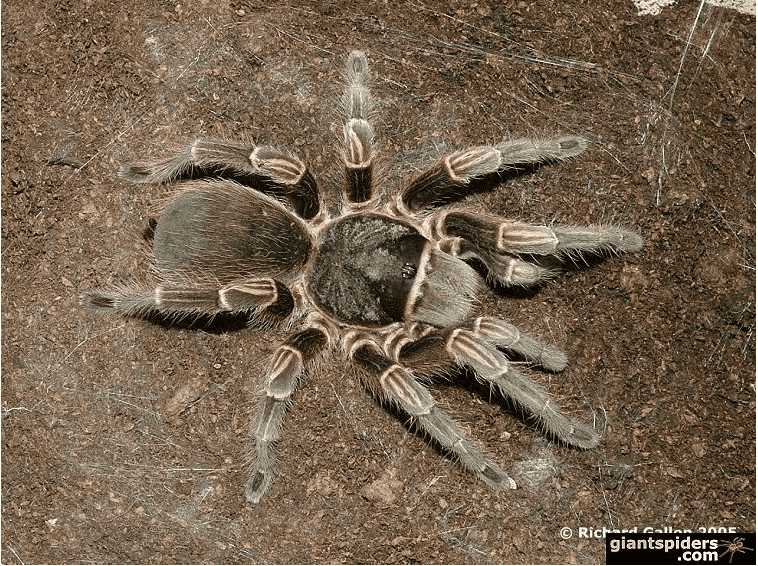
Acanthoscurria chacoana is a robust, hardy New World species with an impressive appetite. Keep substrate mostly dry with a damp corner and a constant water source to keep them thriving.
PRACTICAL HUSBANDRY
Day-to-day care
Diet & prey
Crickets, roaches (e.g., Dubia), and locusts scaled to the spider's size
Feeding
Sling to juvenile: every 4–7 days. Adult: every 10–14 days. Remove uneaten prey promptly.
Enclosure
Terrestrial setup requiring large horizontal floor space (at least 3x to 4x the spider's diagonal leg span in length). Minimum standard terrestrial tank size for an adult is roughly a 45x30x30 cm enclosure. Include a hide.
Substrate
5 to 10 cm of moisture-retaining, clean substrate such as coco fiber, topsoil, or a peat mix that allows light burrowing.
Ventilation
Good cross-ventilation to prevent stagnant, overly stuffy air while maintaining humidity.
Hydration & misting
Keep a shallow, fresh water dish overflowing or filled at all times. Lightly damp one corner of the enclosure for spiderlings/juveniles, while adults do well with dry substrate as long as a full water dish is available.
Handling
Not recommended for regular handling due to their size, sharp fangs, and tendency to flick irritating urticating hairs. Best viewed as a display pet.
Sex differences
Mature males feature tibial hooks on their front legs and a bulbous palpal organ on the pedipalps, and typically have a shorter lifespan. Females are significantly heavier-bodied.
IMPORTANT CONSIDERATIONS
Keeper notes
Possesses large fangs capable of a painful mechanical puncture, alongside irritating urticating hairs that can cause skin or eye irritation.
SOURCES & FURTHER READING
Check the references
Care can vary by species, life stage and local conditions. Review multiple reputable sources before making husbandry decisions.
KEEP EXPLORING
More Acanthoscurria
Other completed care guides from the same scientific genus.