SPECIES CARE GUIDE
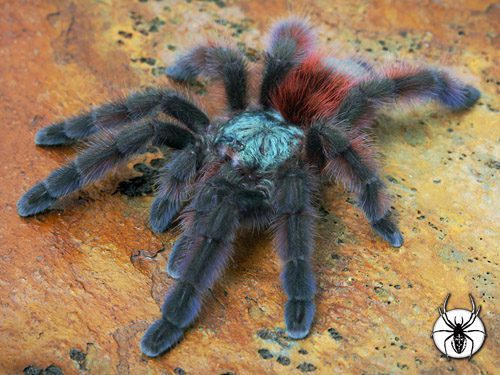
Antilles Pinktoe Tarantula
Caribena versicolor
ENVIRONMENT
Core care conditions
Use these ranges as a starting point and adjust for life stage, enclosure ventilation and observed behaviour.
HUSBANDRY OVERVIEW
At a glance
- Taxonomic group
- Arachnida
- Origin
- Antilles
- Lifestyle
- Arboreal
- Adult size (diagonal leg span)
- 15 cm
- Temperament
- Fast but usually docile
- Experience level
- Intermediate
- Visibility
- Often visible around webbing
- Burrowing
- No; builds arboreal silken retreats
- Growth rate
- Medium
- Urticating hairs
- Yes
- Venom
- Mild
CARE NOTES
Keeping considerations
An arboreal tarantula from Martinique that builds elevated silk retreats. Use a secure vertical enclosure with cork bark, foliage or other upper anchor points, while preserving generous cross-ventilation across the enclosure. Provide a water dish where practical and use measured hydration without creating persistently stagnant, wet conditions; airflow is more useful than chasing a high humidity reading. Spiderlings and adults can move and jump quickly, so doors, ventilation gaps and transfer procedures must be planned before maintenance begins.
PRACTICAL HUSBANDRY
Day-to-day care
Diet & prey
Captive-bred crickets, roaches, locusts and mealworms of an appropriate size; avoid wild-caught prey.
Feeding
Offer suitable prey once or twice weekly according to age and body condition. Remove uneaten prey after 24 hours and stop feeding during premoult and until the fangs harden after moulting.
Enclosure
Secure, front-opening vertical arboreal enclosure with cork bark, foliage and high anchor points for a silken retreat. Provide a shallow elevated or accessible water dish and avoid leaving large open gaps at the top.
Substrate
Use a shallow layer of coco fibre or soil-based substrate to hold limited moisture and catch waste. The arboreal retreat and webbing structure are more important than deep substrate.
Ventilation
Excellent cross-ventilation is essential. Balance humidity with strong airflow and never keep the enclosure sealed, stagnant or constantly wet.
Hydration & misting
Keep a clean water dish available. Lightly wet part of the substrate or droplets on enclosure foliage as needed, then allow drying; avoid soaking the web or spraying the tarantula directly.
Handling
Best kept as an observation animal. It is generally docile but very fast and capable of jumping; use a catch cup and controlled space for transfers.
IMPORTANT CONSIDERATIONS
Keeper notes
Fast, agile and capable of jumping. Keep the enclosure secure and well ventilated, avoid continuously wet conditions, and do not disturb the tarantula or its retreat during a moult.
SOURCES & FURTHER READING
Check the references
Care can vary by species, life stage and local conditions. Review multiple reputable sources before making husbandry decisions.
Last reviewed:
KEEP EXPLORING
More Caribena
Other completed care guides from the same scientific genus.