SPECIES CARE GUIDE
Costa Rican Red Leg
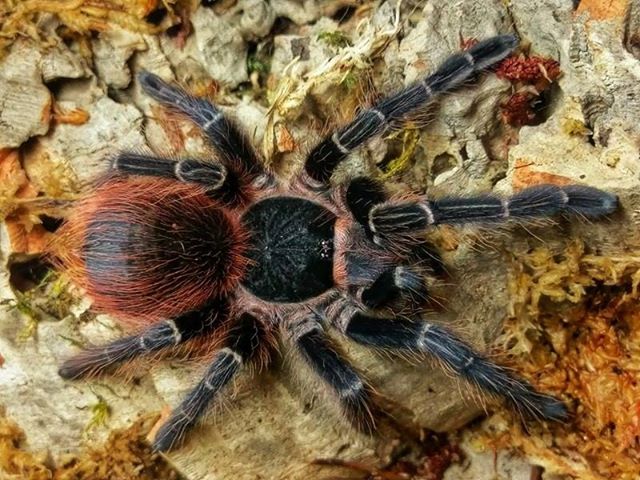
Abdomegaphobema mesomelas
ENVIRONMENT
Core care conditions
Use these ranges as a starting point and adjust for life stage, enclosure ventilation and observed behaviour.
HUSBANDRY OVERVIEW
At a glance
- Taxonomic group
- Arachnida
- Origin
- Costa Rica (Cloud forests)
- Lifestyle
- Terrestrial / Burrowing (likes to construct narrow burrows)
- Adult size (diagonal leg span)
- 12-14 cm
- Temperament
- Nervous
- Experience level
- Intermediate
- Visibility
- Occasionally visible
- Burrowing
- Heavy burrower
- Growth rate
- Moderate
- Urticating hairs
- Yes
- Venom
- Mild
- Tarantula region
- New World
- Male lifespan
- 3-5 years
- Female lifespan
- 12-15+ years
CARE NOTES
Keeping considerations
A large growing, unique looking and ever popular species from the Cloud Forests of Costa Rica, It’s natural habitat means it needs a slightly unique setup to really thrive, and we advise these are kept at between 18-22 degrees rather than anything too warm, Coming from a cloud forest they are used to conditions a little more humid (similar levels of humidity to how you’d rear a blondi), which can be achieved by allowing a moist area in their enclosure or even adding some live moss to help with this, just don’t forget to ensure the enclosure is well ventilated. They are used to living in narrow burrows so some depth of substrate should be offered as well, and would reccomend going to a medium spiderling kit (or medium spiderling box) rather than a small, to give this depth. Are a rarer species to see about these days, as are relatively hard to breed, and females can take over 100 days to hatch out slings from point of the egg sac being hatched.
PRACTICAL HUSBANDRY
Day-to-day care
Diet & prey
Spiderlings: Pinhead crickets, fruit flies, or small pieces of pre-killed feeder insects. Juveniles to Adults: Appropriately sized crickets, locusts, and roaches (such as Dubia roaches). Feed juveniles weekly and adults every 1 to 2 weeks.
Feeding
Enthusiastic eaters. Feed spiderlings appropriately sized pinhead crickets or fruit flies; sub-adults and adults readily accept appropriately sized feeder insects like adult crickets or roaches (such as Dubia roaches) once a week.
Enclosure
Terrestrial, wider than tall (min. 18x18-inch footprint for adults). Good cross-ventilation is critical to prevent mould.
Substrate
A 3-to-4+ inch depth (depending on life stage) made from a mix of organic topsoil, coconut fiber (Eco Earth), and peat moss. Maintain a moisture gradient by keeping one side or corner damp while letting the surface on the other side dry out slightly.
Ventilation
Critical due to the high humidity requirement combined with cooler temperatures; good cross-ventilation prevents stagnant, stuffy air and mould growth.
Hydration & misting
Must have a shallow, clean water dish available at all times. They will also drink droplets from misting or damp substrate
Handling
Not Recommended. Like most New World tarantulas, they are fragile. A fall from even a short height can rupture their abdomen, which is fatal. Furthermore, their skittish nature means handling causes them extreme stress.
IMPORTANT CONSIDERATIONS
Keeper notes
Temperature Sensitivity: Do not overheat. They originate from high-altitude cloud forests and do poorly in stuffy, high-heat conditions; temperatures should strictly remain on the cooler side (18°C–22°C / 65°F–72°F). Defense Mechanism: They possess urticating hairs (defensive hairs on the abdomen that can cause skin and respiratory irritation) and can deliver a defensive bite if cornered.
BREEDING & LIFE CYCLE
Breeding notes
Considered a rare and challenging species to breed in captivity. Courtship requires careful temperature management matching their cooler native range. Females can have a long gestation period post-sac, often taking over 100 days for spiderlings to hatch.
SOURCES & FURTHER READING
Check the references
Care can vary by species, life stage and local conditions. Review multiple reputable sources before making husbandry decisions.
Last reviewed:
KEEP EXPLORING
More tarantulas
Related completed care guides from the tarantulas library.