ENVIRONMENT
Core care conditions
Use these ranges as a starting point and adjust for life stage, enclosure ventilation and observed behaviour.
HUSBANDRY OVERVIEW
At a glance
- Taxonomic group
- Arachnida
- Origin
- Lowland Amazon rainforest in northern South America (Venezuela, French Guiana, Colombia, Brazil, Peru)
- Lifestyle
- Arboreal
- Adult size (diagonal leg span)
- 11-16 cm
- Temperament
- Fast
- Experience level
- Intermediate
- Visibility
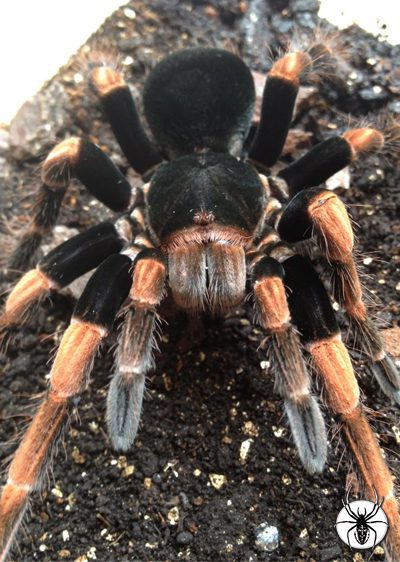
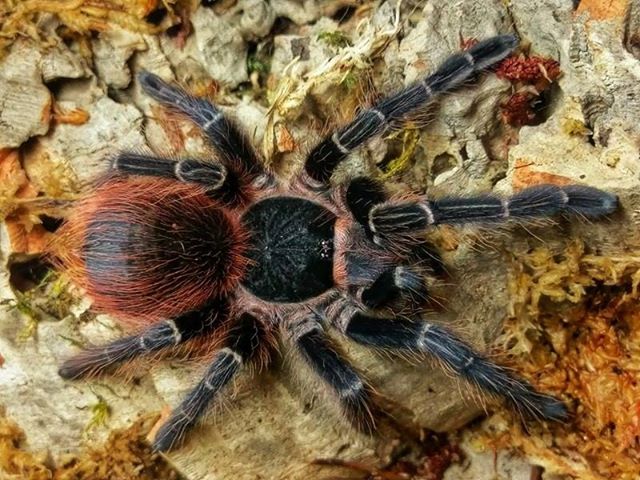
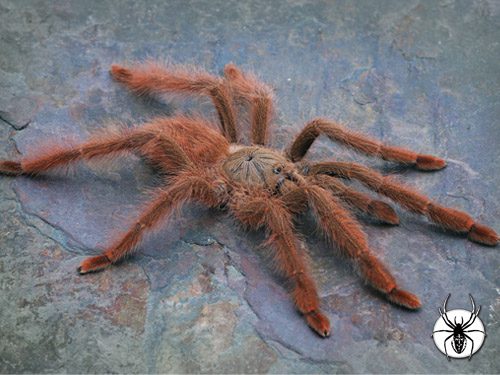
- Good display animal; often stays out in the open or rests near its web retreat on the enclosure glass
- Burrowing
- None (arboreal; constructs thick silk tube webs inside vertical bark crevices or hollows)
- Growth rate
- Fast
- Urticating hairs
- No
- Venom
- Mild
- Tarantula region
- New World
- Male lifespan
- 2–3 months after maturing
- Female lifespan
- 12-18 years
CARE NOTES
Keeping considerations
Ensure secure enclosure lids and tight door gaps since this species can dart out instantly. Focus heavily on providing upright cork bark tubes to mimic natural tree hollows
PRACTICAL HUSBANDRY
Day-to-day care
Diet & prey
Active live insects such as crickets, roaches, and locusts
Feeding
Feed spiderlings 2–3 times a week; sub-adults and adults weekly or every 10–14 days depending on appetite.
Enclosure
Vertical setup (height is prioritized over floor space). Minimum dimensions around 20x20x35 cm for an adult.
Substrate
2–3 inches of moisture-retaining substrate (such as coconut fiber or peat mix) primarily to help anchor vertical decorations and stabilize ambient humidity.
Ventilation
Excellent cross-ventilation is mandatory to prevent air stagnation and mold growth in the humid tropical setup.
Hydration & misting
Provide a lightweight water dish mounted higher up or on a ledge/bark. Lightly mist a portion of the enclosure periodically to keep humidity up, allowing it to dry slightly between maintenance.
Handling
Not recommended for handling due to lightning-fast speed, erratic jumping behaviour, and risk of escape during maintenance.
Sex differences
Adult females are larger, robust, and live significantly longer; mature males are slender, develop tibial hooks, lose vibrant coloration into a matte gray, and have a very short post-molt lifespan.
IMPORTANT CONSIDERATIONS
Keeper notes
Extremely fast runner and agile jumper; accidental escapes during feeding or enclosure maintenance pose the primary risk.
BREEDING & LIFE CYCLE
Breeding notes
Relatively straightforward in captivity; females can produce an egg sac containing 150–200 eggs after successful pairing.
SOURCES & FURTHER READING
Check the references
Care can vary by species, life stage and local conditions. Review multiple reputable sources before making husbandry decisions.
KEEP EXPLORING
More tarantulas
Related completed care guides from the tarantulas library.