SPECIES CARE GUIDE
Bach Ma Earth Tiger
Cyriopagopus sp. “Bach Ma”

ENVIRONMENT
Core care conditions
Use these ranges as a starting point and adjust for life stage, enclosure ventilation and observed behaviour.
HUSBANDRY OVERVIEW
At a glance
- Taxonomic group
- Arachnida
- Origin
- Vietnam (Bạch Mã region)
- Lifestyle
- Fossorial
- Adult size (diagonal leg span)
- 15–17 cm
- Temperament
- Defensive
- Experience level
- Advanced
- Visibility
- Low
- Burrowing
- High
- Growth rate
- Moderate
- Urticating hairs
- No
- Venom
- Moderate
- Tarantula region
- Old World
CARE NOTES
Keeping considerations
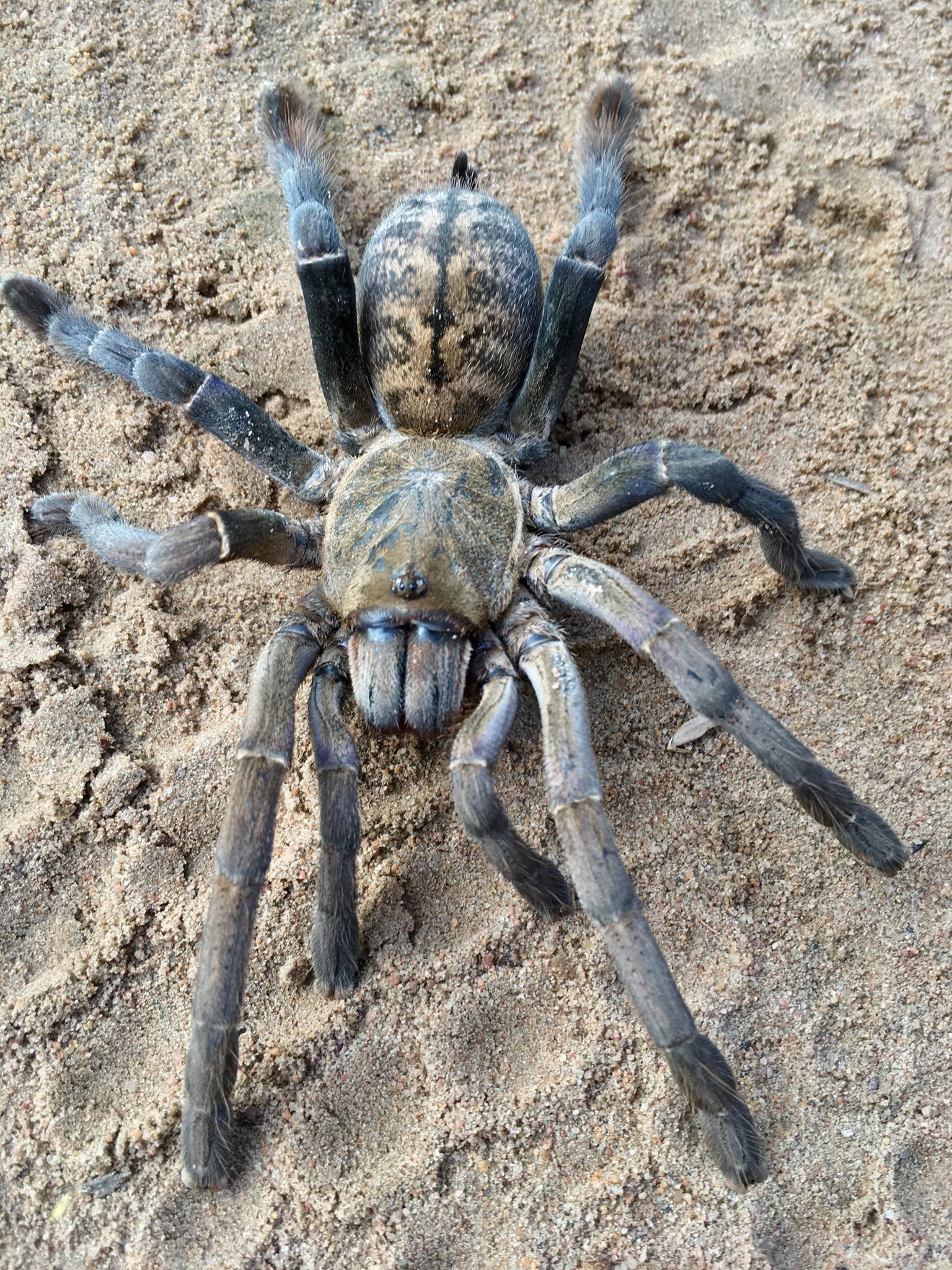
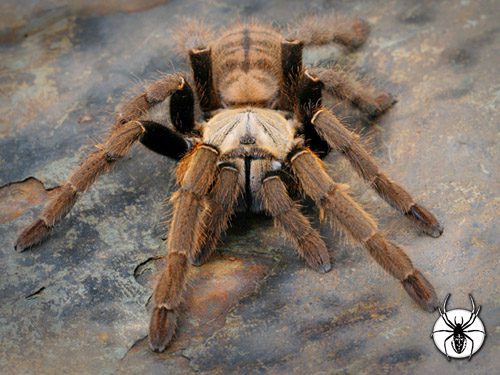
The Bach Ma Earth Tiger is a striking, currently informally named Asian tarantula associated with the Bạch Mã region of central Vietnam. Hobby descriptions emphasise khaki-gold limbs, dark femurs, yellow leg joints and patterned abdomen. It is a secretive burrower and heavy webber. Its montane locality suggests avoiding prolonged high heat; keep a stable moderate temperature, well-ventilated moist lower substrate and an accessible water dish. The names Cyriopagopus, Haplopelma and Melopoeus have all appeared in trade listings; the “sp. Bach Ma” designation is not a formally described species name and should not be presented as an accepted species-level taxon.
PRACTICAL HUSBANDRY
Day-to-day care
Diet & prey
Appropriately sized captive-bred crickets, roaches, locusts and other suitable feeder insects.
Feeding
Offer small insects once or twice weekly to growing spiderlings and juveniles, and usually every 7–14 days to mature individuals depending on size, condition and appetite. Present prey near the burrow entrance rather than disturbing its tunnel. Remove uneaten insects within 24 hours. Do not feed during premoult or until fangs and exoskeleton have hardened after a moult.
Enclosure
Secure low terrestrial enclosure built for a deep burrowing tarantula, around 30 × 25 × 30 cm for an adult with 15–20 cm or more of diggable substrate. Use a cork-bark starter hide, plentiful soil, water dish and escape-proof lid. Juveniles need proportionately smaller housing with enough depth for a tunnel.
Substrate
Deep, well-packed, slightly moisture-retentive soil-based substrate with suitable coir/clay for tunnel stability; typically 15–20 cm or more for an adult. Provide a starter burrow beneath cork bark. Keep lower layers gently moist, with a drier surface section, and avoid unsupported or collapsing tunnels.
Ventilation
Good cross-ventilation is vital. Maintain a moist-to-drier substrate gradient without stagnant air, condensation or persistently waterlogged soil. Do not heat from beneath the burrow.
Hydration & misting
Always supply a clean shallow water dish. Lightly water one side or corner to maintain a gentle deep moisture gradient while allowing other areas to dry somewhat. Avoid soaking the whole enclosure; adjust to local room conditions and observe the spider’s chosen retreat.
Handling
Observation-only: a very fast, defensive Old World earth tiger. Do not free-handle. Use long tools, a secure catch cup and an escape-proof work area for maintenance and rehousing. Avoid exposing or digging into a sealed tunnel.
Sex differences
Adult males generally become leggier and shorter-lived, with mature palpal bulbs and possible tibial structures; females are usually stockier and longer-lived. Confirm sex from a suitable moult where possible. Detailed species-specific sexual dimorphism is not established for this informal taxon.
IMPORTANT CONSIDERATIONS
Keeper notes
Fast, defensive Old World tarantula with no urticating hairs and potentially medically significant venom. Advanced keepers only; do not handle. Deep burrows may hide the spider for long periods. Avoid overheating, collapsed tunnels, stagnant wet air and careless lid opening.
BREEDING & LIFE CYCLE
Breeding notes
Treat as a solitary tarantula and house individually. Pairing can lead to serious injury or cannibalism and should be attempted only by experienced breeders. Its informal taxonomic status means breeding records and cross-identification need especially careful documentation.
SOURCES & FURTHER READING
Check the references
Care can vary by species, life stage and local conditions. Review multiple reputable sources before making husbandry decisions.
KEEP EXPLORING
More Cyriopagopus
Other completed care guides from the same scientific genus.