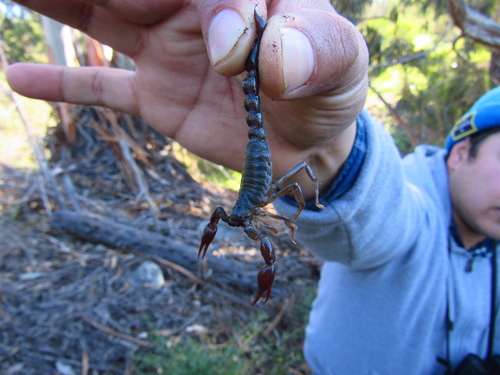
SPECIES CARE GUIDE
Dark Creeper Scorpion
Cheloctonus intermedius

ENVIRONMENT
Core care conditions
Use these ranges as a starting point and adjust for life stage, enclosure ventilation and observed behaviour.
HUSBANDRY OVERVIEW
At a glance
- Taxonomic group
- Arachnida
- Origin
- Eastern South Africa (including Mpumalanga) and Eswatini
- Lifestyle
- Terrestrial burrower
- Adult size (body / total length)
- Around 8–9 cm
- Temperament
- Usually reclusive; do not handle
- Experience level
- Intermediate; suitable for careful observation, not handling
- Visibility
- Mostly hidden in a burrow; may sit at the entrance at night
- Burrowing
- True burrower; provide deep, firm, compactable substrate that can hold a stable burrow
- Growth rate
- Limited species-specific captive data
- Venom
- Not considered medically important; a sting can cause local pain. Avoid stings and seek medical advice if concerned.
CARE NOTES
Keeping considerations
A dark, ground-dwelling South African scorpion that excavates burrows in firm soil and may be found under rocks or at burrow entrances. Use a secure, well-ventilated enclosure with deep, compactable soil-based substrate; keep the surface mostly dry while retaining a little moisture deeper down. Provide stable, heavy cover resting on the enclosure floor, a shallow water dish and appropriately sized live prey. The African Snakebite Institute describes the sting as painful but not medically important. Scorpions should never be handled; use tools and care when servicing the enclosure.
SOURCES & FURTHER READING
Check the references
Care can vary by species, life stage and local conditions. Review multiple reputable sources before making husbandry decisions.
KEEP EXPLORING
More scorpions
Related completed care guides from the scorpions library.