SPECIES CARE GUIDE
Eight-Spotted Crab Spider
Platythomisus octomaculatus

ENVIRONMENT
Core care conditions
Use these ranges as a starting point and adjust for life stage, enclosure ventilation and observed behaviour.
HUSBANDRY OVERVIEW
At a glance
- Taxonomic group
- Arachnida
- Origin
- Thailand, Malaysia, Singapore, Brunei and Indonesia
- Lifestyle
- Arboreal
- Adult size (diagonal leg span)
- 3.5–4 cm
- Temperament
- Skittish
- Experience level
- Intermediate
- Visibility
- Often visible
- Burrowing
- None
- Growth rate
- Moderate
CARE NOTES
Keeping considerations
Provide several broad leaves at different heights for resting, ambush hunting and construction of the silken retreat. Maintain moderate humidity with strong airflow rather than keeping the enclosure constantly wet.
PRACTICAL HUSBANDRY
Day-to-day care
Diet & prey
Fruit flies and small flies for juveniles; flies, moths and small roaches for larger specimens
Feeding
Feed juveniles 2–3 times weekly and adults 1–2 times weekly, using appropriately sized prey and removing uneaten insects.
Enclosure
Well-ventilated arboreal enclosure around 15 × 15 × 20 cm or larger, with broad leaves, fine branches and secure access
Substrate
A shallow layer of moisture-retentive soil-based substrate with leaf litter or sphagnum
Ventilation
Excellent cross-ventilation is essential to prevent stagnant air, mould and mite problems
Hydration & misting
Lightly mist leaves and one side 2–3 times weekly so droplets are available, allowing partial drying between applications. Never saturate the enclosure.
Handling
Do not handle. This spider is small, delicate and capable of sudden movement; guide it with a catch cup during maintenance.
Sex differences
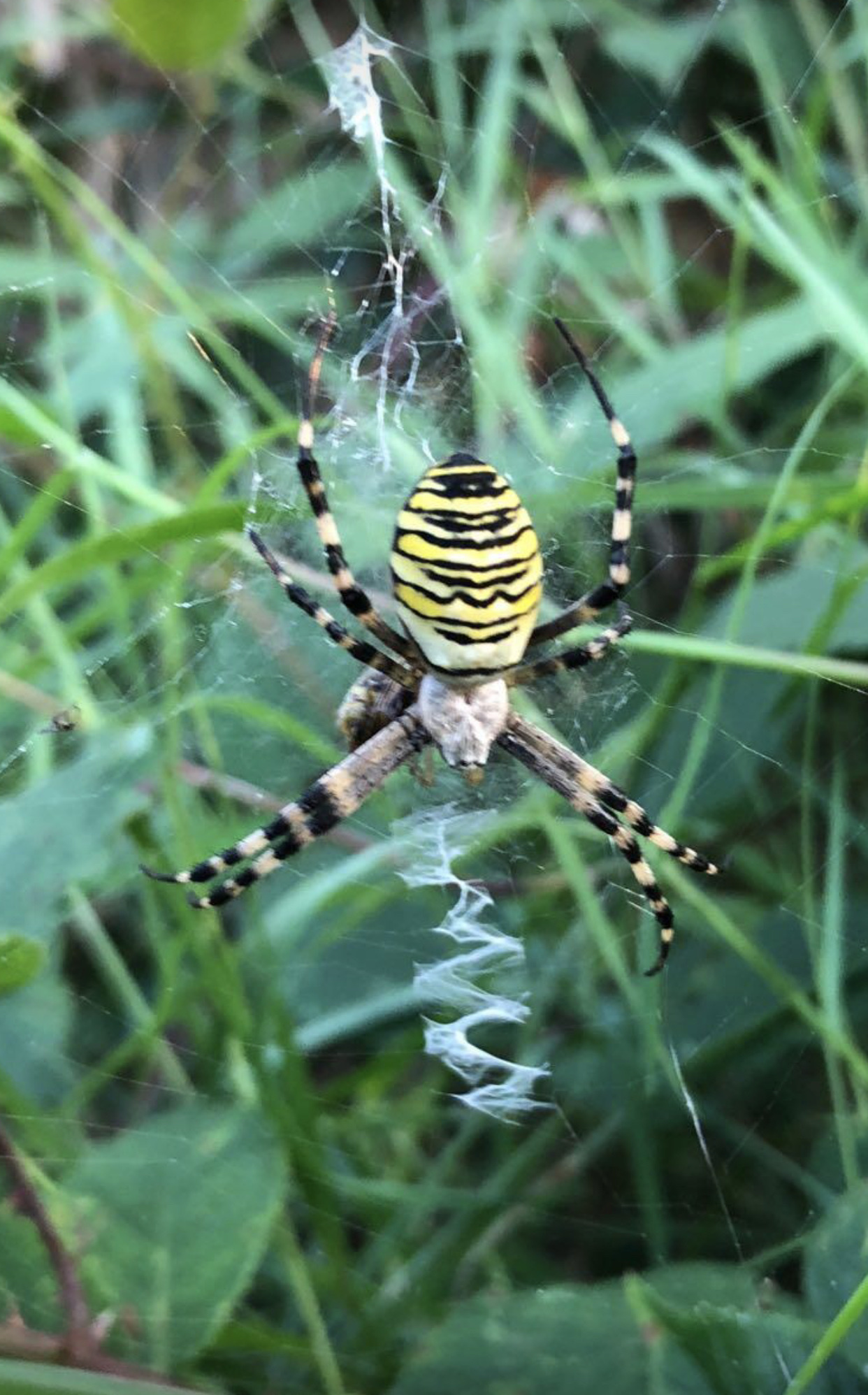
Females reach about 23 mm body length and are bright yellow with bold black spots. Males are only about 4–5 mm and vary from red to yellow with less conspicuous spotting.
ENCLOSURE EXAMPLE · AD · AFFILIATE LINK
Recommended arboreal enclosure
Such as The Spider Shop Acrylic Arboreal Terrarium ↗
An example with size options. Check the selected size, ventilation and security against this species and life stage.
IMPORTANT CONSIDERATIONS
Keeper notes
Can display defensively when disturbed. Avoid handling or cornering the spider, keep the enclosure escape-proof and prevent waterlogged conditions.
BREEDING & LIFE CYCLE
Breeding notes
The female binds overlapping broad leaves with strong silk to form a retreat and guards her egg sac inside. Keep the retreat undisturbed and provide very small flying prey once spiderlings disperse.
SOURCES & FURTHER READING
Check the references
Care can vary by species, life stage and local conditions. Review multiple reputable sources before making husbandry decisions.
KEEP EXPLORING
More true spiders
Related completed care guides from the true spiders library.