SPECIES CARE GUIDE
Giant Shield Mantis
Rhombodera stalli

ENVIRONMENT
Core care conditions
Use these ranges as a starting point and adjust for life stage, enclosure ventilation and observed behaviour.
HUSBANDRY OVERVIEW
At a glance
- Taxonomic group
- Insecta
- Origin
- Southeast Asia
- Lifestyle
- Arboreal
- Adult size (body / total length)
- 8–10 cm
- Temperament
- Confident, highly predatory and defensive when threatened
- Experience level
- Beginner to intermediate
- Visibility
- Frequently visible
- Burrowing
- Non-burrowing
- Growth rate
- Medium to fast
- Male lifespan
- 6–8 months
- Female lifespan
- 10–12 months
CARE NOTES
Keeping considerations
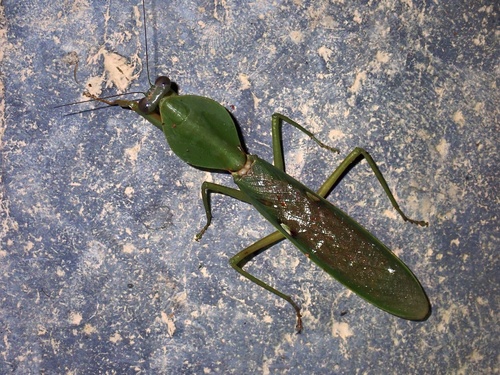
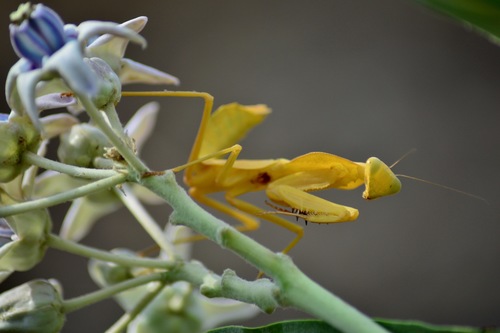
Rhombodera stalli, also widely listed as Rhombodera stalii, is a large shield mantis recognised by its broad leaf-like pronotum. Provide a tall, well-ventilated enclosure with sturdy climbing and moulting surfaces, moderate humidity, regular drinking droplets and ample unobstructed space below the ceiling.
PRACTICAL HUSBANDRY
Day-to-day care
Diet & prey
Flies, roaches, crickets and locusts appropriately sized for the mantis
Feeding
Offer live prey smaller than the mantis can safely overpower. Nymphs can take fruit flies before progressing to small roaches or crickets; larger nymphs and adults accept roaches, locusts and flies. Remove uneaten prey before moulting.
Enclosure
House singly in a well-ventilated vertical enclosure of at least 20 × 20 × 30 cm for an adult. Provide sturdy branches, foliage and a secure mesh ceiling, with clear moulting space at least three times the mantis’s body length.
Substrate
Use a shallow, clean substrate such as coco fibre or paper towel that can absorb light misting without remaining waterlogged.
Ventilation
Strong cross-ventilation and a ventilated or mesh top are essential. The enclosure should dry between light mistings to prevent stagnant, mould-prone conditions.
Hydration & misting
Mist lightly once daily or every other day so drinking droplets are available, allowing the enclosure to dry before misting again.
Handling
Routine handling is not recommended. Move it by allowing it to walk onto a branch or container; adults, particularly males, may jump or fly.
Sex differences
Females are larger and more robust, with a broader shield and abdomen. Males are slimmer, have longer antennae and wings extending beyond the abdomen, and are active fliers.
ENCLOSURE EXAMPLE · AD · AFFILIATE LINK
Recommended arboreal enclosure
Such as The Spider Shop Acrylic Arboreal Terrarium ↗
An example with size options. Check the selected size, ventilation and security against this species and life stage.
IMPORTANT CONSIDERATIONS
Keeper notes
A powerful, highly predatory mantis that may take large prey and can display an impressive threat posture. Keep individuals separately and never leave feeder insects in during a moult.
BREEDING & LIFE CYCLE
Breeding notes
Keep singly because of strong cannibalistic tendencies. Pair only well-fed adults under close supervision and separate them promptly if aggression occurs.
SOURCES & FURTHER READING
Check the references
Care can vary by species, life stage and local conditions. Review multiple reputable sources before making husbandry decisions.
KEEP EXPLORING
More Rhombodera
Other completed care guides from the same scientific genus.