SPECIES CARE GUIDE
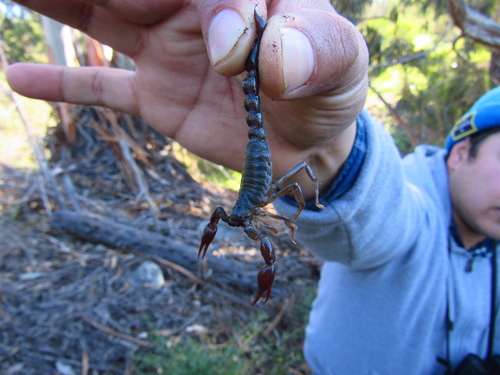
Javan Blue Forest Scorpion
Javanimetrus cyaneus

ENVIRONMENT
Core care conditions
Use these ranges as a starting point and adjust for life stage, enclosure ventilation and observed behaviour.
HUSBANDRY OVERVIEW
At a glance
- Taxonomic group
- Arachnida
- Origin
- Indonesia (Java, Madura and Bali)
- Lifestyle
- Terrestrial
- Adult size (body / total length)
- 10–13 cm
- Temperament
- Defensive
- Experience level
- Intermediate
- Visibility
- Occasionally visible
- Burrowing
- Yes
- Venom
- Mild
CARE NOTES
Keeping considerations
A robust tropical forest scorpion that spends much of its time in a burrow or beneath cover. The key is deep, stable substrate with humid lower layers, a slightly drier surface and strong ventilation. Anchor heavy decor from the enclosure base so it cannot collapse into a burrow. Keep this species alone.
PRACTICAL HUSBANDRY
Day-to-day care
Diet & prey
Roaches, crickets, locusts and other appropriately sized captive-bred insects
Feeding
Offer adults one or two suitably sized prey items every 7–10 days. Juveniles can take smaller prey more frequently. Remove uneaten prey within 24 hours and never leave live prey with a moulting scorpion.
Enclosure
A secure terrestrial enclosure of at least 30 × 30 × 30 cm for one adult, with ample floor space, a tight lid and one or more firmly anchored hides.
Substrate
Provide 15–20 cm of damp, compactable forest soil or a soil and coco-fibre mix suitable for burrowing. Add leaf litter and an initial retreat beneath cork bark.
Ventilation
Provide good cross-ventilation, including airflow near substrate level, while retaining the humid lower layers. Avoid stagnant, condensation-heavy conditions.
Hydration & misting
Keep the lower substrate evenly damp but never waterlogged. Pour a little water into one corner as needed and provide a permanent shallow water dish.
Handling
Do not free-handle. Use long tools and a secure catch container for maintenance or transfers, keeping hands away from hides and burrows.
Sex differences
Adult sex is best confirmed from the underside using pectinal and genital operculum features; overall size or colour alone is not a dependable guide.
ENCLOSURE EXAMPLE · AD · AFFILIATE LINK
Recommended terrestrial enclosure
Such as The Spider Shop Invertarium Setup ↗
An example with size options. Check the selected footprint, fall height, ventilation and substrate depth for this animal.
IMPORTANT CONSIDERATIONS
Keeper notes
Can sting and deliver a powerful, painful pinch. Although the venom is not generally considered medically significant, reactions vary. Keep the enclosure escape-proof and never reach blindly beneath hides.
BREEDING & LIFE CYCLE
Breeding notes
House singly. Females give birth to live young, which remain on the mother’s back until their first moult. Separate the juveniles afterward because cannibalism is possible.
SOURCES & FURTHER READING
Check the references
Care can vary by species, life stage and local conditions. Review multiple reputable sources before making husbandry decisions.
KEEP EXPLORING
More scorpions
Related completed care guides from the scorpions library.