SPECIES CARE GUIDE
Red Stripe Pink Toe
Avicularia minatrix

ENVIRONMENT
Core care conditions
Use these ranges as a starting point and adjust for life stage, enclosure ventilation and observed behaviour.
HUSBANDRY OVERVIEW
At a glance
- Taxonomic group
- Arachnida
- Origin
- Venezuela and Brazil (northern South America)
- Lifestyle
- Arboreal
- Adult size (diagonal leg span)
- 8–10 cm
- Temperament
- Skittish / fast
- Experience level
- Intermediate
- Visibility
- Moderate; often visible near silk retreat
- Burrowing
- Does not burrow
- Growth rate
- Moderate
- Urticating hairs
- Yes
- Venom
- Mild
- Tarantula region
- New World
CARE NOTES
Keeping considerations
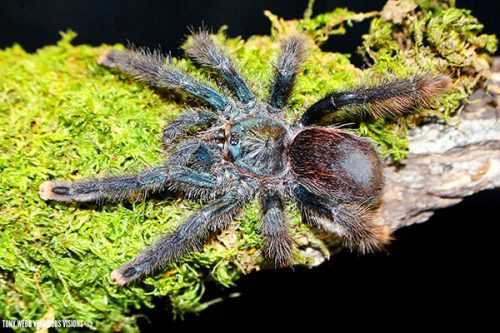
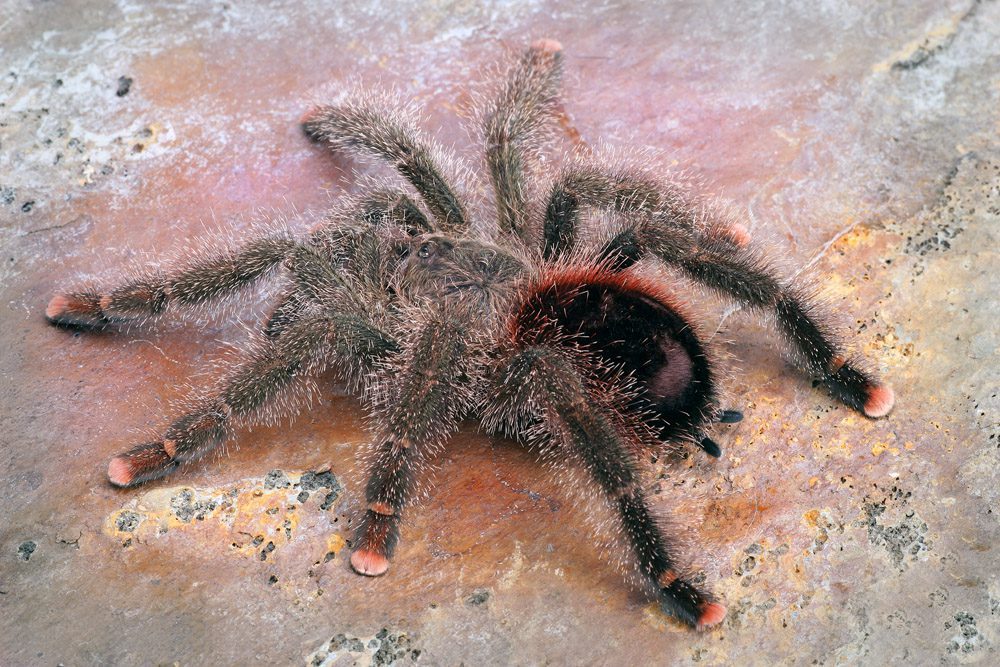
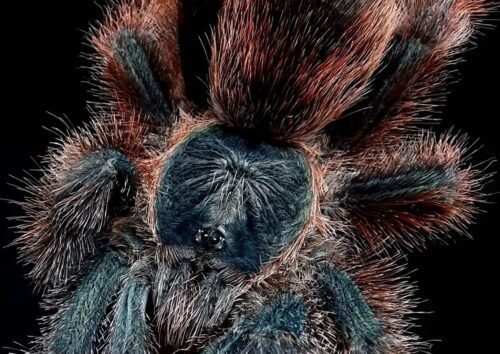
A compact pinktoe tarantula with distinctive reddish-orange abdominal markings. Provide vertical cork retreats, leafy cover and sturdy webbing anchors. Cross-ventilation matters more than chasing a fixed humidity reading: aim for a hydrated but well-aired enclosure, not saturated substrate. Avoid direct heat lamps or direct sunlight. Monitor behaviour, feeding and moults; do not disturb during a moult.
PRACTICAL HUSBANDRY
Day-to-day care
Diet & prey
Appropriately sized live insects: small roaches, crickets, flies and occasional locusts
Feeding
Offer suitably sized prey about weekly for juveniles and every 10–14 days for adults, adjusting to abdomen condition and appetite. Remove uneaten prey within 24 hours, particularly around moulting.
Enclosure
Vertically oriented, escape-proof arboreal enclosure with cork bark tubes, branches and foliage for silk retreats. For an adult, approximately 20 × 20 × 30 cm or larger, with secure anchoring and accessible water.
Substrate
About 3–5 cm of coco fibre/organic topsoil mix; keep mostly lightly moist at depth, never waterlogged. Add leaf litter if desired.
Ventilation
Excellent cross-flow ventilation on opposite sides plus upper vents is essential. Avoid sealed, constantly humid enclosures.
Hydration & misting
Provide a clean water dish at all times, including a small elevated dish where practical. Lightly wet one area of substrate or occasionally mist foliage, allowing surfaces to dry and maintaining airflow.
Handling
Best observed rather than handled. Fast arboreal movement and sudden jumps make falls and escapes possible; use a catch cup for maintenance.
Sex differences
Mature males are generally slimmer and shorter-lived, with enlarged palpal bulbs and often tibial hooks; females are typically stockier and longer-lived. Confirm sex from a suitable moult.
ENCLOSURE EXAMPLE · AD · AFFILIATE LINK
Recommended arboreal enclosure
Such as The Spider Shop Acrylic Arboreal Terrarium ↗
An example with size options. Check the selected size, ventilation and security against this species and life stage.
IMPORTANT CONSIDERATIONS
Keeper notes
Fast and agile, potentially prone to bolting or jumping. Urticating hairs and venom can cause irritation; avoid handling and protect eyes. Poor airflow combined with persistent wetness is a serious husbandry risk.
SOURCES & FURTHER READING
Check the references
Care can vary by species, life stage and local conditions. Review multiple reputable sources before making husbandry decisions.
KEEP EXPLORING
More Avicularia
Other completed care guides from the same scientific genus.