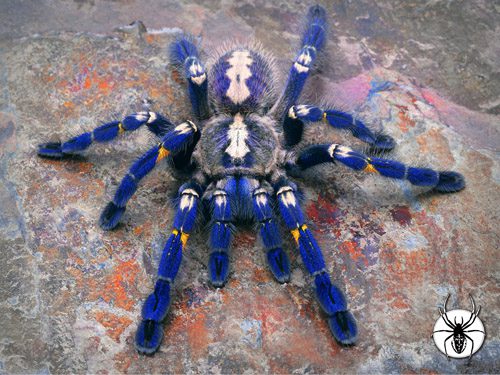
SPECIES CARE GUIDE
Smith's Ornamental
Poecilotheria smithi

ENVIRONMENT
Core care conditions
Use these ranges as a starting point and adjust for life stage, enclosure ventilation and observed behaviour.
HUSBANDRY OVERVIEW
At a glance
- Taxonomic group
- Arachnida
- Origin
- Sri Lanka
- Lifestyle
- Arboreal
- Adult size (diagonal leg span)
- 15–18 cm
- Temperament
- Very defensive
- Experience level
- Advanced
- Visibility
- Mostly hidden
- Burrowing
- Does not burrow
- Growth rate
- Fast
- Urticating hairs
- No
- Venom
- Medically significant
- Tarantula region
- Old World
CARE NOTES
Keeping considerations
Smith’s Ornamental is an uncommon Sri Lankan ornamental tarantula that uses tree hollows, bark fissures and other elevated retreats. Offer a tall, secure enclosure with a cork hide and unobstructed climbing space. Keep a modest moisture reserve and clean drinking water while maintaining airflow; stable conditions matter more than a rigid humidity number. This threatened species should be sourced from documented captive-bred stock, with attention to legal trade and provenance. Never handle or disturb a moulting animal.
PRACTICAL HUSBANDRY
Day-to-day care
Diet & prey
Live crickets, roaches and appropriately sized locusts; smaller prey for slings and juveniles.
Feeding
Offer suitably sized prey approximately every 5–7 days for juveniles and every 10–14 days for adults, adjusted to appetite and abdomen condition. Remove uneaten feeders within 24 hours. Stop feeding during premoult and resume only once the fangs have hardened after moulting.
Enclosure
Secure, vertically oriented arboreal enclosure with a front-opening door, tall cork bark tube or slab, multiple climbing anchors and dense cover. Adult guideline: approximately 30 × 30 × 45 cm (width × depth × height). Design the setup to allow maintenance without direct contact.
Substrate
Approximately 5–8 cm of coco fibre and organic topsoil mixture; retain some moisture in one area without waterlogging. Leaf litter is optional.
Ventilation
Generous cross-ventilation and upper airflow are important. Avoid stagnant, saturated conditions; balance air exchange with a slightly moist substrate corner and a permanent water source.
Hydration & misting
Provide a clean water dish continuously. Lightly moisten one substrate area and mist a section of foliage occasionally as needed; allow wet surfaces to dry. Do not spray the spider directly or rely on constant misting to maintain a fixed reading.
Handling
Do not handle. Use long feeding tongs, a secure catch cup and a planned, clear rehouse route. Locate the spider before opening the enclosure and keep doors closed whenever possible.
Sex differences
Adult males are typically slimmer with mature palpal bulbs and shorter adult lives; females are more robust and generally longer lived. Confirm sex using a clear moult when possible.
ENCLOSURE EXAMPLE · AD · AFFILIATE LINK
Recommended arboreal enclosure
Such as The Spider Shop Acrylic Arboreal Terrarium ↗
An example with size options. Check the selected size, ventilation and security against this species and life stage.
IMPORTANT CONSIDERATIONS
Keeper notes
Advanced keepers only. Extremely fast arboreal Old World tarantula with medically significant venom; bites may cause severe local pain and systemic symptoms. It lacks New World urticating hairs. Escape prevention and no-contact maintenance are essential. Seek urgent medical assessment after a bite, especially with systemic symptoms.
SOURCES & FURTHER READING
Check the references
Care can vary by species, life stage and local conditions. Review multiple reputable sources before making husbandry decisions.
KEEP EXPLORING
More Poecilotheria
Other completed care guides from the same scientific genus.