SPECIES CARE GUIDE
Texas Brown Tarantula
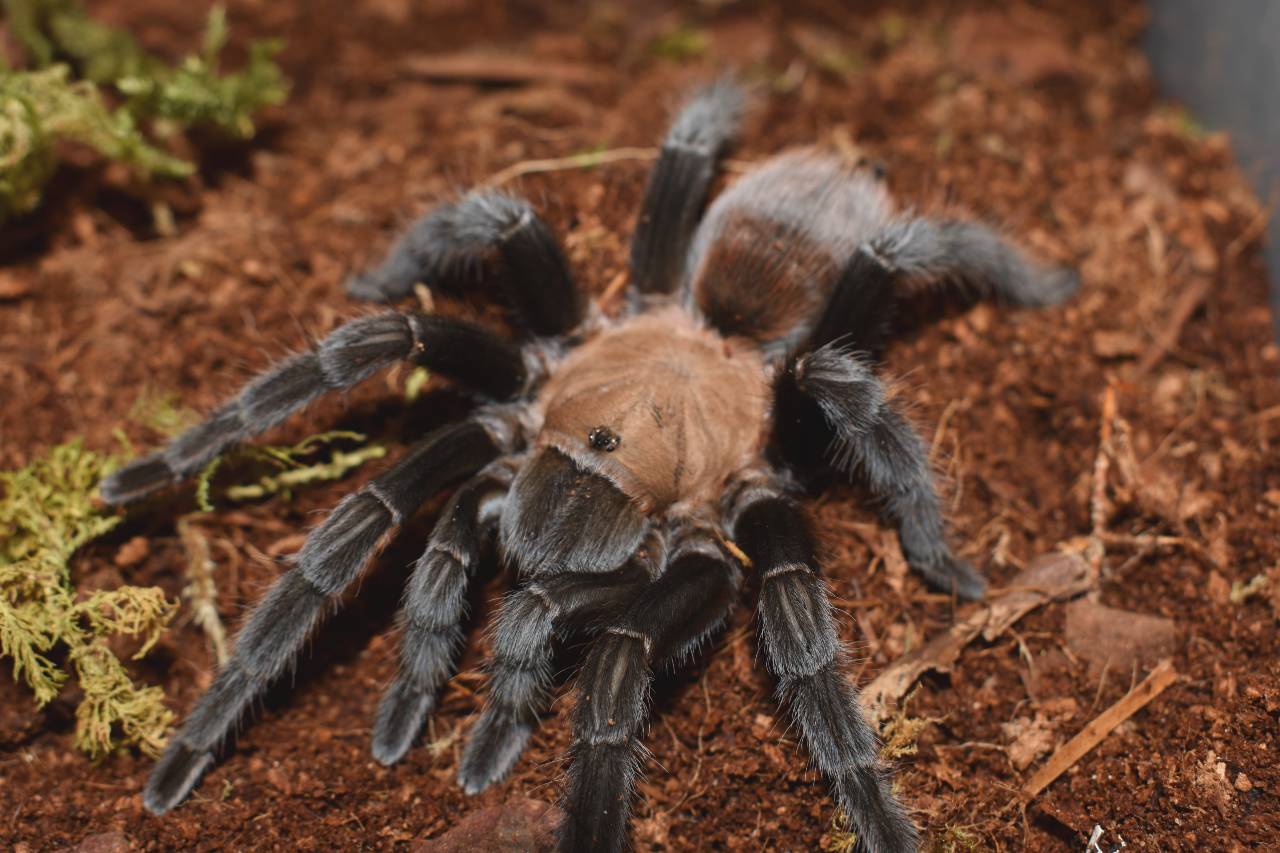
Aphonopelma hentzi

ENVIRONMENT
Core care conditions
Use these ranges as a starting point and adjust for life stage, enclosure ventilation and observed behaviour.
HUSBANDRY OVERVIEW
At a glance
- Taxonomic group
- Arachnida
- Origin
- United States
- Lifestyle
- Terrestrial
- Adult size (diagonal leg span)
- 16cm
- Temperament
- Calm and generally docile
- Experience level
- Beginner
- Visibility
- Mostly hidden
- Burrowing
- Heavy burrower
- Growth rate
- Slow
- Urticating hairs
- Yes
- Venom
- Mild
- Tarantula region
- New World
- Female lifespan
- 20–30 years
CARE NOTES
Keeping considerations
A slow-growing, long-lived terrestrial tarantula from xeric grassland, desert, scrub and suburban habitats. It may construct a freestanding burrow or use a scrape beneath rocks or wood. Provide deep compactable substrate, a secure hide, a water dish and good ventilation, while avoiding continuously wet substrate.
PRACTICAL HUSBANDRY
Day-to-day care
Diet & prey
Crickets, roaches, locusts and other suitable invertebrate prey
Feeding
Offer appropriately sized prey; juveniles may feed more often than adults. Remove uneaten prey, especially during premoult.
Enclosure
A secure, terrestrial enclosure with more floor space than height, a hide and sufficient substrate for a burrow.
Substrate
Deep, compactable substrate that can hold a burrow; provide cork bark or another starter hide.
Ventilation
Good cross-ventilation; avoid stagnant, persistently damp conditions.
Hydration & misting
Keep a clean water dish available. Keep the enclosure mainly dry rather than routinely misting.
Handling
Best kept as an observation species. Avoid handling because falls can be fatal and urticating hairs may irritate skin and eyes.
Sex differences
Females are larger and more robust; mature males are slimmer with longer legs and leave their burrows to search for mates.
ENCLOSURE EXAMPLE · AD · AFFILIATE LINK
Recommended terrestrial enclosure
Such as The Spider Shop Invertarium Setup ↗
An example with size options. Check the selected footprint, fall height, ventilation and substrate depth for this animal.
IMPORTANT CONSIDERATIONS
Keeper notes
Possesses urticating hairs. Avoid contact with the eyes and airways. Although usually calm, any individual may bite, and terrestrial tarantulas are vulnerable to fatal falls.
BREEDING & LIFE CYCLE
Breeding notes
Breeding activity varies by locality, with documented April–August and September–October seasons. A Chihuahuan Desert study recorded 206–911 eggs per sac and 74–91 days of embryonic development under controlled laboratory conditions.
SOURCES & FURTHER READING
Check the references
Care can vary by species, life stage and local conditions. Review multiple reputable sources before making husbandry decisions.
KEEP EXPLORING
More Aphonopelma
Other completed care guides from the same scientific genus.