
SPECIES CARE GUIDE
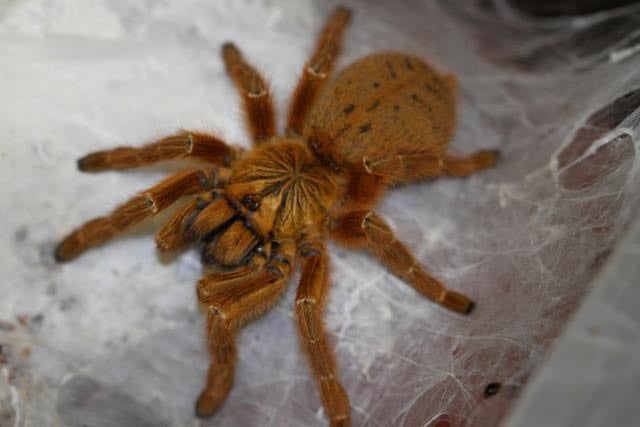
Usambara Orange Baboon
Pterinochilus murinus 'Usambara'
ENVIRONMENT
Core care conditions
Use these ranges as a starting point and adjust for life stage, enclosure ventilation and observed behaviour.
HUSBANDRY OVERVIEW
At a glance
- Taxonomic group
- Arachnida
- Origin
- Tanzania (Usambara Mountains)
- Lifestyle
- Terrestrial
- Adult size (diagonal leg span)
- 10–15 cm
- Temperament
- Defensive
- Experience level
- Advanced
- Visibility
- Occasionally visible
- Burrowing
- Yes
- Growth rate
- Fast
- Urticating hairs
- Absent
- Venom
- Medically significant
- Tarantula region
- Old World
- Male lifespan
- 3–4 years
- Female lifespan
- 12–15 years
CARE NOTES
Keeping considerations
'Usambara' is a hobby locality label for Pterinochilus murinus, not a formally described subspecies. It is commonly associated with the bright Orange Colour Form and the older UMW label; preserve verified locality records and do not mix breeding lines of uncertain origin. Provide a dry, well-ventilated enclosure with a starter retreat, deep substrate and many web anchors. It commonly builds dense silk tunnels and may excavate beneath them. Disturb established webbing as little as possible and keep singly.
PRACTICAL HUSBANDRY
Day-to-day care
Diet & prey
Appropriately sized crickets, locusts, roaches and mealworms; small or pre-killed prey for slings.
Feeding
Offer slings small prey every 4–5 days, juveniles every 5–7 days and adults every 10–14 days. Remove uneaten prey within 24 hours and do not feed during premoult.
Enclosure
A secure, escape-proof terrestrial enclosure with generous floor space, a cork-bark retreat and abundant anchor points for extensive web tunnels. Keep climbing height low.
Substrate
Provide 10–15 cm of firm, burrowable soil or coco-based substrate, kept mainly dry. Add cork bark and stable décor as web anchors.
Ventilation
Strong cross-ventilation is essential. Avoid stagnant air and persistently damp substrate.
Hydration & misting
Keep a shallow water dish available. Maintain mostly dry conditions; occasionally overflow the dish or lightly moisten one corner, then allow it to dry.
Handling
Do not handle. Observe through the enclosure and use long tools, a catch cup and a clear maintenance plan whenever the enclosure is opened.
Sex differences
Mature males are slimmer and leggier, with tibial hooks and enlarged pedipalps; females are more robust and usually live considerably longer.
ENCLOSURE EXAMPLE · AD · AFFILIATE LINK
Recommended terrestrial enclosure
Such as The Spider Shop Invertarium Setup ↗
An example with size options. Check the selected footprint, fall height, ventilation and substrate depth for this animal.
IMPORTANT CONSIDERATIONS
Keeper notes
Extremely fast and defensive Old World tarantula with medically significant venom. It may bite readily when disturbed and is unsuitable for handling. Use exceptional care during feeding, maintenance and rehousing.
SOURCES & FURTHER READING
Check the references
Care can vary by species, life stage and local conditions. Review multiple reputable sources before making husbandry decisions.
KEEP EXPLORING
More Pterinochilus
Other completed care guides from the same scientific genus.


