SPECIES CARE GUIDE
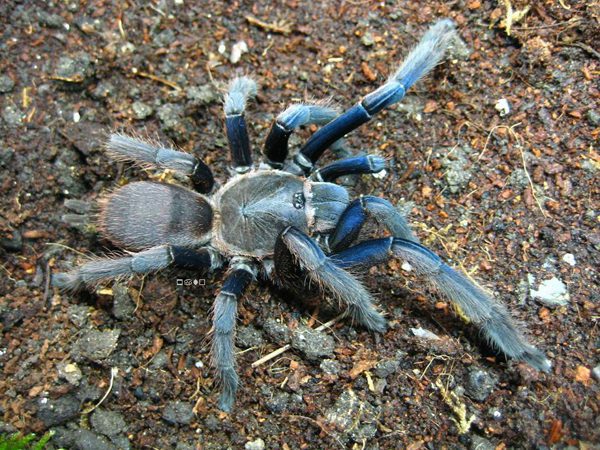
Vietnam Blue
Chilobrachys dyscolus
ENVIRONMENT
Core care conditions
Use these ranges as a starting point and adjust for life stage, enclosure ventilation and observed behaviour.
HUSBANDRY OVERVIEW
At a glance
- Taxonomic group
- Arachnida
- Origin
- Vietnam
- Lifestyle
- Fossorial
- Adult size (diagonal leg span)
- 13–16 cm
- Temperament
- Defensive
- Experience level
- Advanced
- Visibility
- Rarely visible
- Burrowing
- Yes
- Growth rate
- Fast
- Urticating hairs
- Absent
- Venom
- Medically significant
- Tarantula region
- Old World
- Male lifespan
- 2–4 years
- Female lifespan
- 12–15 years
CARE NOTES
Keeping considerations
Provide deep, compact substrate and a starter tunnel beneath cork bark. This obligate burrower usually remains underground and may cover the entrance and surrounding surface with dense silk. Disturb the burrow and established webbing as little as possible. Keep singly and ensure all ventilation holes and openings are escape-proof.
PRACTICAL HUSBANDRY
Day-to-day care
Diet & prey
Appropriately sized crickets, roaches, locusts and mealworms; small or pre-killed prey for slings.
Feeding
Offer slings small prey every 4–5 days, juveniles every 5–7 days and adults every 7–14 days. Remove uneaten prey within 24 hours and do not feed during premoult.
Enclosure
A very secure fossorial enclosure with more depth than height, a starter burrow and cork bark or other anchor points for heavy webbing. An adult setup around 20 × 20 × 30 cm can provide suitable digging depth.
Substrate
Provide 15–20 cm of firm, cohesive and moisture-retentive soil or coco-based substrate that will hold a deep burrow. Keep lower layers lightly moist without waterlogging.
Ventilation
Strong cross-ventilation is essential to balance the moist lower substrate and prevent stagnant conditions.
Hydration & misting
Keep a shallow water dish available. Maintain a moisture gradient by watering one side or the lower substrate; avoid soaking the entire enclosure or spraying the spider.
Handling
Do not handle. Use long tools, a catch cup and a clear rehousing plan whenever the enclosure is opened.
Sex differences
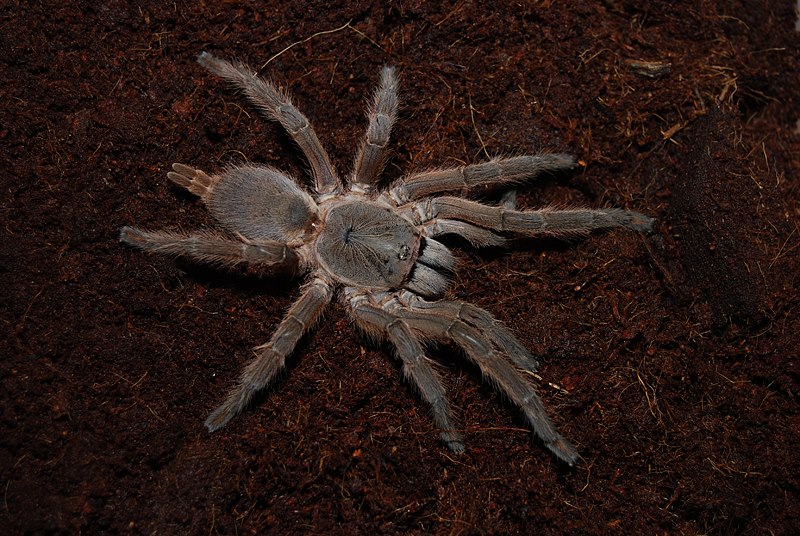
Mature males are slimmer and leggier, with tibial hooks and enlarged pedipalps; females are more robust and usually live considerably longer.
IMPORTANT CONSIDERATIONS
Keeper notes
Extremely fast and defensive Old World tarantula with medically significant venom. It may bite when disturbed and is unsuitable for handling. Take exceptional care during maintenance and rehousing.
SOURCES & FURTHER READING
Check the references
Care can vary by species, life stage and local conditions. Review multiple reputable sources before making husbandry decisions.
KEEP EXPLORING
More Chilobrachys
Other completed care guides from the same scientific genus.