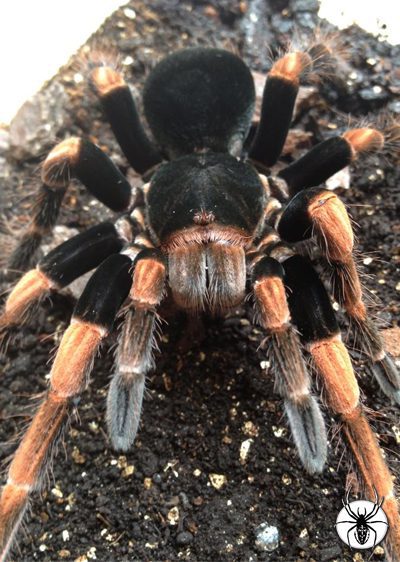
SPECIES CARE GUIDE
Dark Colour Form Orange Baboon Tarantula
Pterinochilus murinus (DCF)

ENVIRONMENT
Core care conditions
Use these ranges as a starting point and adjust for life stage, enclosure ventilation and observed behaviour.
HUSBANDRY OVERVIEW
At a glance
- Taxonomic group
- Arachnida
- Origin
- Eastern and southern Africa; locality varies by DCF stock (for example Kenya or Mikumi, Tanzania)
- Lifestyle
- Terrestrial / opportunistic burrower; may web retreats above ground
- Adult size (diagonal leg span)
- Variable by locality and individual
- Temperament
- Fast and highly defensive
- Experience level
- Advanced; display species only
- Visibility
- Often visible around a dense web retreat, but may remain hidden
- Burrowing
- Provide deep substrate, a secure hide and strong web anchors
- Growth rate
- Fast
- Urticating hairs
- No
- Venom
- Old World tarantula; avoid handling and treat bites as medically significant
CARE NOTES
Keeping considerations
DCF means Dark Colour Form: a locality-associated colour form of Pterinochilus murinus, not a separate species. Use the supplier's exact locality label in an individual specimen record when known; DCF stock may be labelled Kenya, Mikumi or another locality, and those labels should not be assumed interchangeable. It is not Heteroscodra maculata (the Togo Starburst Baboon). Care is broadly the same as other P. murinus: a secure, well-ventilated terrestrial enclosure with deep substrate, a retreat/web anchors, water dish and a mostly dry surface with a slight moisture gradient. Expect a very fast, defensive Old World tarantula; avoid handling.
SOURCES & FURTHER READING
Check the references
Care can vary by species, life stage and local conditions. Review multiple reputable sources before making husbandry decisions.
KEEP EXPLORING
More Pterinochilus
Other completed care guides from the same scientific genus.