SPECIES CARE GUIDE
Mexican Flame Knee
Brachypelma auratum

ENVIRONMENT
Core care conditions
Use these ranges as a starting point and adjust for life stage, enclosure ventilation and observed behaviour.
HUSBANDRY OVERVIEW
At a glance
- Taxonomic group
- Arachnida
- Origin
- Mexico (Michoacán, Guerrero and Balsas basin)
- Lifestyle
- Terrestrial
- Adult size (diagonal leg span)
- 12–15 cm
- Temperament
- Generally calm; may flick hairs
- Experience level
- Beginner
- Visibility
- Often visible
- Burrowing
- May excavate a shallow retreat
- Growth rate
- Slow to medium
- Urticating hairs
- Yes
- Venom
- Mild
- Tarantula region
- New World
- Male lifespan
- 5–10 years
- Female lifespan
- 20–30 years
CARE NOTES
Keeping considerations
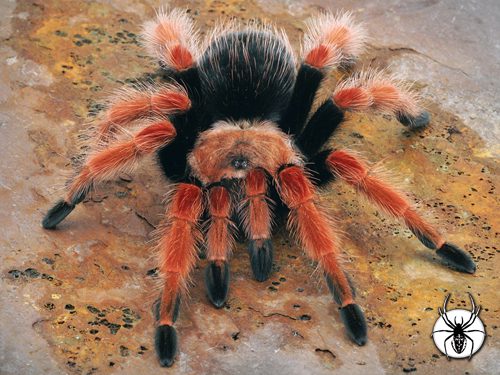
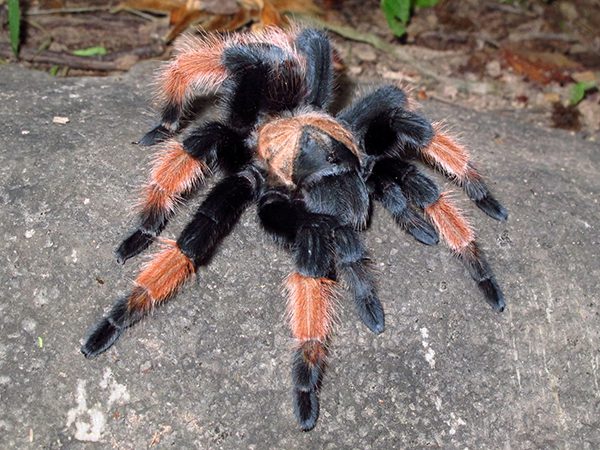
Brachypelma auratum, the Mexican Flame Knee, is a slow-growing terrestrial tarantula endemic to Mexico, particularly the Balsas basin around Michoacán and Guerrero. Its black legs bear striking red-orange knee patches and pale bands. This is usually a calm, visible display species, but it can flick urticating hairs. Provide deep diggable substrate, a secure hide, low fall height, good ventilation and a water dish. Mature animals generally prefer mostly dry conditions with access to a slightly moist retreat. Females can live for decades; growth is relatively slow. Wild populations face habitat loss and trade pressure, so captive breeding matters.
PRACTICAL HUSBANDRY
Day-to-day care
Diet & prey
Live, appropriately sized feeder insects such as crickets, roaches and locusts. Spiderlings take small cricket or roach nymphs, or suitably sized pre-killed prey. Avoid wild-caught insects that may carry pesticides or parasites.
Feeding
Offer spiderlings small prey around twice weekly, juveniles every 7–10 days and adults approximately every 10–14 days, adjusting to abdomen size and appetite. Remove uneaten prey within a day, particularly during premoult. Resume feeding only once the fangs are fully hardened after a moult.
Enclosure
Low, secure terrestrial enclosure with more floor space than height. Provide a stable cork-bark hide, water dish and room to excavate a retreat. An adult enclosure around 30–45 cm long and 30 cm wide can be suitable, with deep substrate to limit exposed fall height; use appropriately smaller setups for slings. House singly.
Substrate
A packed, diggable mix of pesticide-free topsoil and coco fibre, approximately 10–15 cm or deeper where space permits. Offer a starter hide or shallow burrow. Keep most of the surface relatively dry for established adults, while providing a slightly moist lower corner or moisture gradient; spiderlings may need a little more moisture.
Ventilation
Good cross-ventilation and secure upper vents are important. Avoid damp, stagnant conditions and condensation. Maintain a dry-to-slightly-moist gradient rather than trying to hold a high humidity percentage throughout the enclosure.
Hydration & misting
Provide a shallow, clean water dish at all times. Occasionally moisten or overflow one corner of the substrate so the spider can choose a more humid area. Routine heavy misting is unnecessary for established adults; avoid soaking the whole enclosure or spraying the spider directly.
Handling
Generally calm but best appreciated as a display animal. Handling risks falls and stress, and the spider may flick irritating urticating hairs. For transfers, gently guide it into a catch cup rather than lifting by hand. Wash hands after maintenance and avoid touching the face or eyes.
Sex differences
Adult females are robust and very long-lived. Mature males are slimmer and leggier, with palpal bulbs and other maturity traits; they usually live substantially shorter lives. Reliable sexing is best done from an intact moult, rather than colour or size alone.
ENCLOSURE EXAMPLE · AD · AFFILIATE LINK
Recommended terrestrial enclosure
Such as The Spider Shop Invertarium Setup ↗
An example with size options. Check the selected footprint, fall height, ventilation and substrate depth for this animal.
IMPORTANT CONSIDERATIONS
Keeper notes
New World species with urticating hairs that may irritate skin, eyes and airways. Even a calm individual can bite or bolt. A heavy-bodied terrestrial tarantula can be seriously injured by falls, so minimise clear climbing height. Brachypelma auratum is subject to CITES trade controls; choose captive-bred specimens and retain provenance information.
BREEDING & LIFE CYCLE
Breeding notes
Keep individually. Breeding requires mature, correctly identified animals and supervised pairing, with care taken to avoid injury or cannibalism. An egg sac is guarded by the female; young should be separated once sufficiently developed. Source animals from reputable captive-bred stock because wild populations face collection pressure.
SOURCES & FURTHER READING
Check the references
Care can vary by species, life stage and local conditions. Review multiple reputable sources before making husbandry decisions.
KEEP EXPLORING
More Brachypelma
Other completed care guides from the same scientific genus.