SPECIES CARE GUIDE
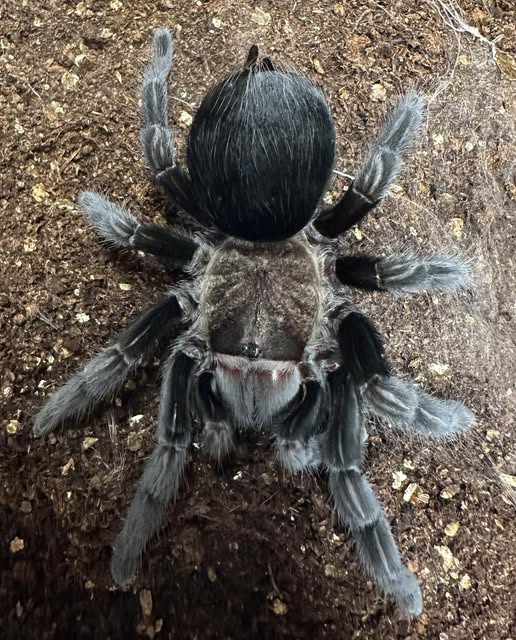
Veracruz Red Rump
Tliltocatl kahlenbergi

ENVIRONMENT
Core care conditions
Use these ranges as a starting point and adjust for life stage, enclosure ventilation and observed behaviour.
HUSBANDRY OVERVIEW
At a glance
- Taxonomic group
- Arachnida
- Origin
- Mexico, principally Veracruz and neighbouring eastern states
- Lifestyle
- Fossorial
- Adult size (diagonal leg span)
- 13–15 cm
- Temperament
- Docile
- Experience level
- Beginner
- Visibility
- Nocturnal
- Burrowing
- Extensive
- Growth rate
- Moderate
- Urticating hairs
- Present
- Venom
- Mild
- Tarantula region
- New World
- Male lifespan
- Around 3 years
- Female lifespan
- Around 15 years
CARE NOTES
Keeping considerations
This species naturally constructs or modifies deep retreats and may remain hidden by day. Keep the surface comparatively dry while maintaining a slight moisture gradient below. CITES-regulated: obtain captive-bred animals from lawful sources.
PRACTICAL HUSBANDRY
Day-to-day care
Diet & prey
Appropriately sized crickets, roaches and locusts; mealworms occasionally
Feeding
Feed slings every 3–5 days, juveniles every 5–7 days and adults every 7–14 days, adjusting to body condition. Remove uneaten prey.
Enclosure
Low terrestrial enclosure around 40 × 30 cm for an adult, with minimal fall height, a deep burrowing zone, hide and water dish
Substrate
At least 10–15 cm of firmly packed soil-based substrate, mostly dry at the surface with slightly moist lower layers
Ventilation
Strong cross-ventilation; avoid stagnant air and persistently wet substrate
Hydration & misting
Provide a clean shallow water dish at all times. Occasionally moisten one corner or the deeper substrate; do not routinely mist the entire enclosure.
Handling
Avoid handling. Although generally calm, it can kick urticating hairs and may move suddenly; use a catch cup and long tools.
Sex differences
Mature males are slimmer and longer-legged and develop tibial hooks and palpal bulbs; females are heavier-bodied and longer-lived.
IMPORTANT CONSIDERATIONS
Keeper notes
Urticating hairs can irritate skin, eyes and airways. Avoid falls by keeping the enclosure low, and never disturb or feed the spider while it is moulting.
BREEDING & LIFE CYCLE
Breeding notes
In the wild, mating occurs mainly from August to January, spanning the end of the rainy season and start of the dry season. Females produce egg sacs during the drier winter months, with young emerging roughly two months later. Pairings must be supervised closely.
SOURCES & FURTHER READING
Check the references
Care can vary by species, life stage and local conditions. Review multiple reputable sources before making husbandry decisions.
KEEP EXPLORING
More Tliltocatl
Other completed care guides from the same scientific genus.