SPECIES CARE GUIDE
Cameroon Red Baboon
Hysterocrates gigas

ENVIRONMENT
Core care conditions
Use these ranges as a starting point and adjust for life stage, enclosure ventilation and observed behaviour.
HUSBANDRY OVERVIEW
At a glance
- Taxonomic group
- Arachnida
- Origin
- Cameroon
- Lifestyle
- Fossorial
- Adult size (diagonal leg span)
- 15–18 cm
- Temperament
- Fast and defensive
- Experience level
- Advanced
- Visibility
- Often hidden in burrow
- Burrowing
- Deep burrow builder
- Growth rate
- Medium to fast
- Urticating hairs
- No
- Venom
- Moderate
- Tarantula region
- Old World
CARE NOTES
Keeping considerations
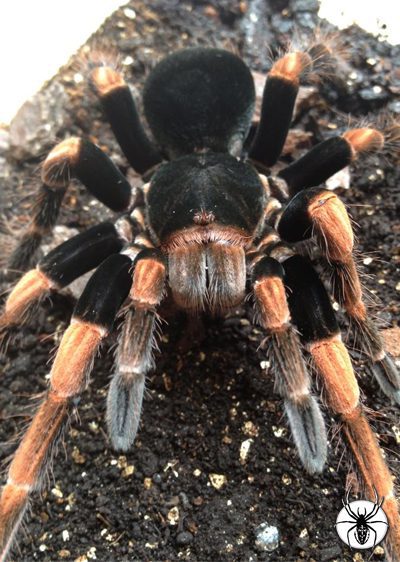
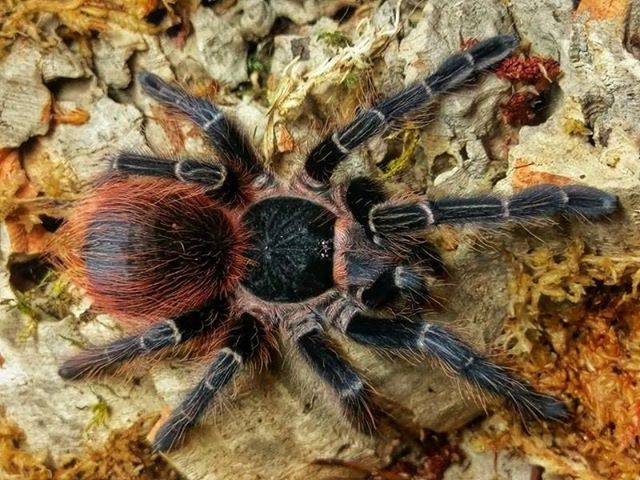
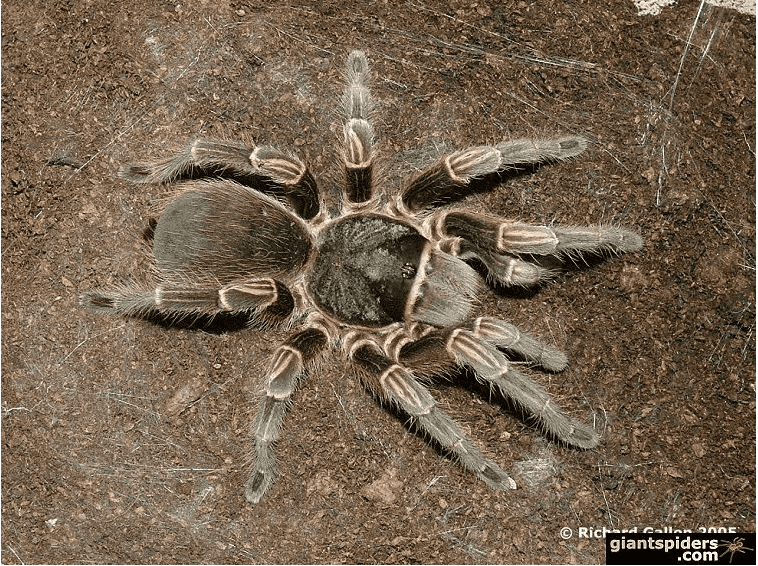
Hysterocrates gigas is the Cameroon Red Baboon, a robust fossorial Old World tarantula recorded from Cameroon. It spends much of its time in deep, often extensive burrows. Compared with drier African horned baboons, this species benefits from a consistently lightly moist lower substrate zone, a water dish and good air exchange. Provide generous stable digging depth, avoid disturbing sealed retreats and handle only by controlled catch-cup transfers. Although often described as an able swimmer, deliberate submersion or flooded housing is not appropriate husbandry. Some hobby photographs and labels for Hysterocrates species are difficult to verify, so use diagnostic sources when identifying specimens.
PRACTICAL HUSBANDRY
Day-to-day care
Diet & prey
Live feeder insects such as appropriately sized crickets, roaches and locusts. Spiderlings accept small cricket or roach nymphs or suitably sized pre-killed prey.
Feeding
Offer small spiderlings prey about twice weekly, juveniles every 5–7 days and adults around every 7–14 days, adjusting to body condition and appetite. Present prey near the burrow entrance rather than digging out the spider. Remove leftovers promptly, and do not feed during premoult or until the fangs harden after moulting.
Enclosure
Low, secure fossorial enclosure with substantial digging depth, adequate ground area and a well-fitting lid. For a large adult, roughly 35–45 cm floor length and 30 cm width with 20–25 cm of compactable substrate is a practical starting point. Provide a cork-bark starter hide or tunnel and a water dish. Keep clear fall height low and house individually.
Substrate
A deep, well-packed, moisture-retentive mix of pesticide-free topsoil and coco fibre, optionally with clay for tunnel stability. Provide around 20–25 cm or more for a large specimen, with proportionate depth for young animals. Keep deeper layers consistently lightly moist, with a less wet surface and no standing water or collapsing tunnels.
Ventilation
Use strong, secure cross-ventilation even in a humid enclosure. Maintain moisture in the lower substrate while allowing the surface to dry somewhat; avoid persistent condensation, sour odours and mould. Do not cover all vents simply to chase a humidity percentage.
Hydration & misting
Keep a clean, accessible water dish. Add water gradually to one area of the substrate to maintain a humid lower burrow zone, while preserving a moisture gradient and avoiding flooding. Light misting may be used when needed, but never saturate the whole enclosure or spray the spider directly.
Handling
Do not handle. This is a strong, quick Old World burrower with a defensive response when cornered. For maintenance or rehousing, locate the animal first, use a catch cup and long tools, and work in a contained escape-proof area. Do not excavate a settled burrow without a genuine welfare need.
Sex differences
Females are more heavily built and generally longer-lived; mature males are leaner and leggier with palpal bulbs. Sex should be confirmed from a well-preserved moult rather than colour or body size alone. Reliable species-specific lifespan figures vary between captive sources.
IMPORTANT CONSIDERATIONS
Keeper notes
Large, fast and defensive Old World tarantula with no urticating hairs and potentially significant bite effects. Not suitable for handling. Deep, sealed retreats and long periods underground are normal; never flood the burrow to force the spider out. Keep ventilation secure and prevent both waterlogging and complete drying of the lower substrate.
BREEDING & LIFE CYCLE
Breeding notes
Keep singly for routine husbandry. Breeding pairs should be introduced only under experienced supervision because females may attack or consume males. Females guard egg sacs within their burrows; maintain stable moisture and avoid disturbing a brooding female. Reports of tolerance among young do not justify communal adult housing.
SOURCES & FURTHER READING
Check the references
Care can vary by species, life stage and local conditions. Review multiple reputable sources before making husbandry decisions.
KEEP EXPLORING
More tarantulas
Related completed care guides from the tarantulas library.