SPECIES CARE GUIDE
Cuban Blue Tarantula
Citharacanthus cyaneus

ENVIRONMENT
Core care conditions
Use these ranges as a starting point and adjust for life stage, enclosure ventilation and observed behaviour.
HUSBANDRY OVERVIEW
At a glance
- Taxonomic group
- Arachnida
- Origin
- Cuba
- Lifestyle
- Terrestrial
- Adult size (diagonal leg span)
- 10 cm
- Temperament
- Calm but may move quickly when disturbed
- Experience level
- Beginner
- Visibility
- Occasionally visible
- Burrowing
- Opportunistic burrower
- Growth rate
- Medium
- Urticating hairs
- Yes
- Venom
- Mild
- Tarantula region
- New World
- Male lifespan
- 2–4 years
- Female lifespan
- 10–15 years
CARE NOTES
Keeping considerations
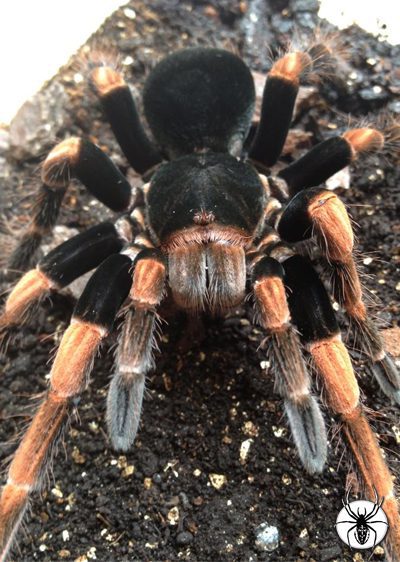
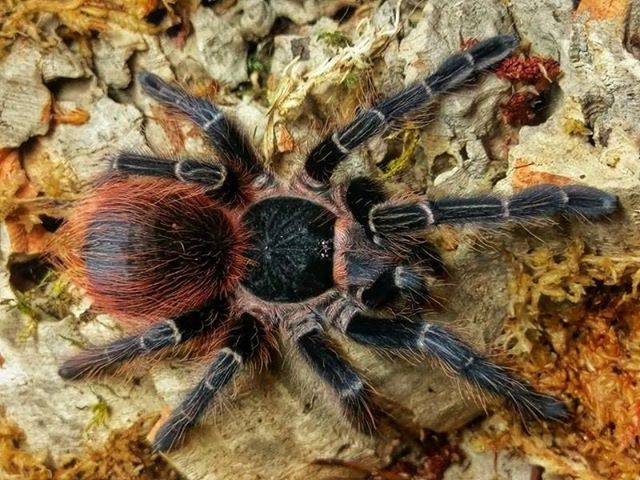
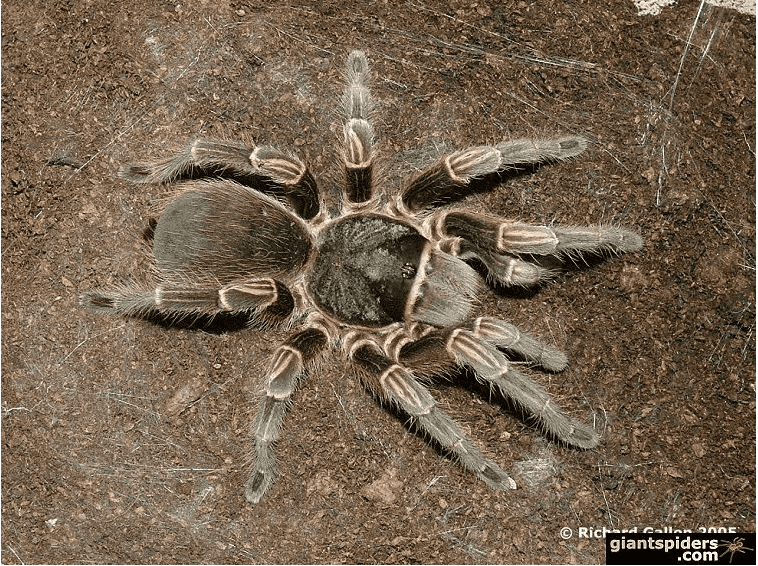
Citharacanthus cyaneus is a compact Cuban terrestrial tarantula with distinctive orange and violet tones and purple fangs. It is generally hardy and calm, but may dig around its retreat. Prioritise a secure low enclosure, a hide, a moderate moisture gradient, fresh water and strong cross-ventilation.
PRACTICAL HUSBANDRY
Day-to-day care
Diet & prey
Crickets, roaches, locusts and other appropriately sized invertebrate prey
Feeding
Offer appropriately sized live prey and adjust frequency to the spider’s size and body condition. Remove uneaten prey promptly, especially when a moult is approaching.
Enclosure
Use a secure, low terrestrial enclosure with good floor space, a cork-bark hide and enough depth for opportunistic digging. Keep overhead space limited to reduce injury from falls.
Substrate
Provide approximately 7–10 cm of firmly packed coco fibre, unfertilised topsoil or a suitable mix, with a moisture gradient.
Ventilation
Provide strong cross-ventilation. Avoid stagnant, saturated conditions and allow the lightly dampened area to dry before re-wetting.
Hydration & misting
Provide a clean, shallow water dish at all times. Keep one area of the substrate lightly damp while leaving the remainder mostly dry; do not soak the enclosure.
Handling
Handling is not recommended. Although generally calm, it can move quickly and may flick irritating urticating hairs; use a catch container for rehousing.
Sex differences
Mature males are slimmer and leggier and have a much shorter adult lifespan. Females remain more robust and retain the species’ vivid colouration for longer.
ENCLOSURE EXAMPLE · AD · AFFILIATE LINK
Recommended terrestrial enclosure
Such as The Spider Shop Invertarium Setup ↗
An example with size options. Check the selected footprint, fall height, ventilation and substrate depth for this animal.
IMPORTANT CONSIDERATIONS
Keeper notes
Possesses urticating hairs that can irritate skin, eyes and airways. Avoid handling, keep the enclosure low to prevent falls and never leave live prey with a moulting spider.
SOURCES & FURTHER READING
Check the references
Care can vary by species, life stage and local conditions. Review multiple reputable sources before making husbandry decisions.
KEEP EXPLORING
More tarantulas
Related completed care guides from the tarantulas library.