SPECIES CARE GUIDE
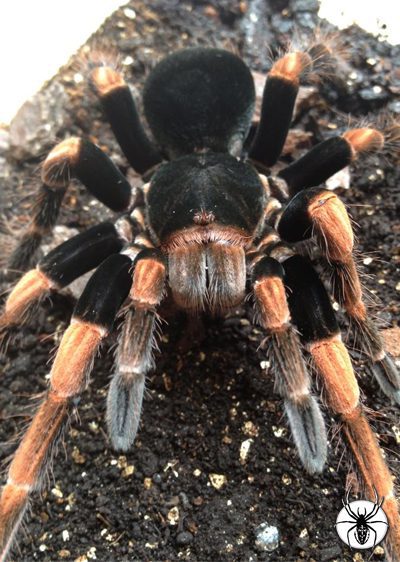
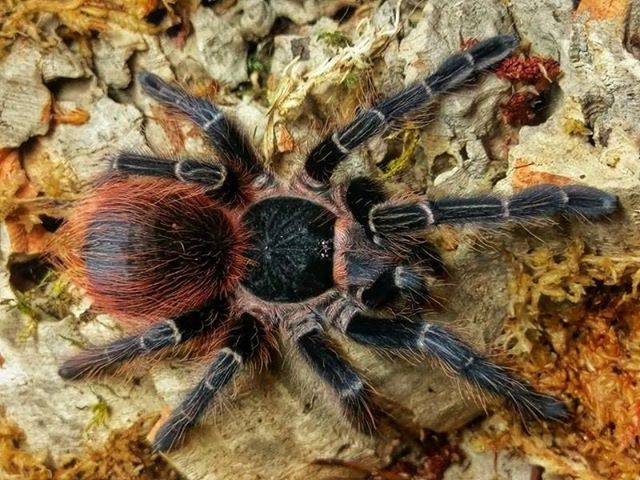
Green Femur Birdeater
Phormictopus sp. "Green Femur"

ENVIRONMENT
Core care conditions
Use these ranges as a starting point and adjust for life stage, enclosure ventilation and observed behaviour.
HUSBANDRY OVERVIEW
At a glance
- Taxonomic group
- Arachnida
- Origin
- Dominican Republic
- Lifestyle
- Terrestrial
- Adult size (diagonal leg span)
- Up to about 20 cm (vendor estimate)
- Temperament
- Nervous; may be fast and defensive
- Experience level
- Intermediate; best treated as a display species
- Visibility
- Often visible once settled; provide a secure hide
- Burrowing
- May dig; provide a deep, stable terrestrial substrate
- Growth rate
- Likely moderate to fast; species-level data for this undescribed form is limited
- Urticating hairs
- Yes; New World tarantula
- Venom
- Avoid handling; bites and urticating hairs can cause injury or irritation
CARE NOTES
Keeping considerations
A large, terrestrial Phormictopus sold under an informal Green Femur locality/form name; it is not formally identified to species. The Spider Shop lists Dominican Republic origin, 24–26°C, 60–70% humidity, a nervous disposition and an estimated adult leg span of about 20 cm. Provide a secure, well-ventilated enclosure with a deep substrate, stable low hide and water dish. Keep the surface mostly dry with a modestly moist area rather than making the enclosure wet. As a New World tarantula, assume urticating hairs are present. Fast movement and defensive responses are possible, so avoid handling.
ENCLOSURE EXAMPLE · AD · AFFILIATE LINK
Recommended terrestrial enclosure
Such as The Spider Shop Invertarium Setup ↗
An example with size options. Check the selected footprint, fall height, ventilation and substrate depth for this animal.
SOURCES & FURTHER READING
Check the references
Care can vary by species, life stage and local conditions. Review multiple reputable sources before making husbandry decisions.
KEEP EXPLORING
More Phormictopus
Other completed care guides from the same scientific genus.