SPECIES CARE GUIDE
South American Spotted Eye Mantis
Stagmatoptera femoralis
ENVIRONMENT
Core care conditions
Use these ranges as a starting point and adjust for life stage, enclosure ventilation and observed behaviour.
HUSBANDRY OVERVIEW
At a glance
- Taxonomic group
- Insecta
- Origin
- South America
- Lifestyle
- Arboreal
- Adult size (body / total length)
- 9–10 cm
- Temperament
- Generally calm
- Experience level
- Intermediate
- Visibility
- Often visible
- Burrowing
- Does not burrow
- Growth rate
- Fast
CARE NOTES
Keeping considerations
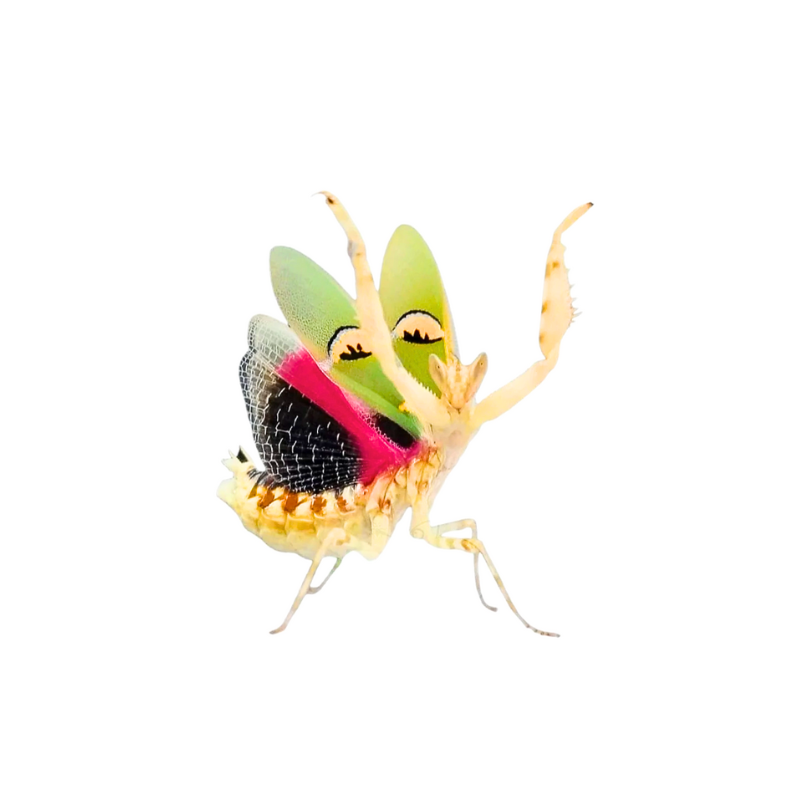
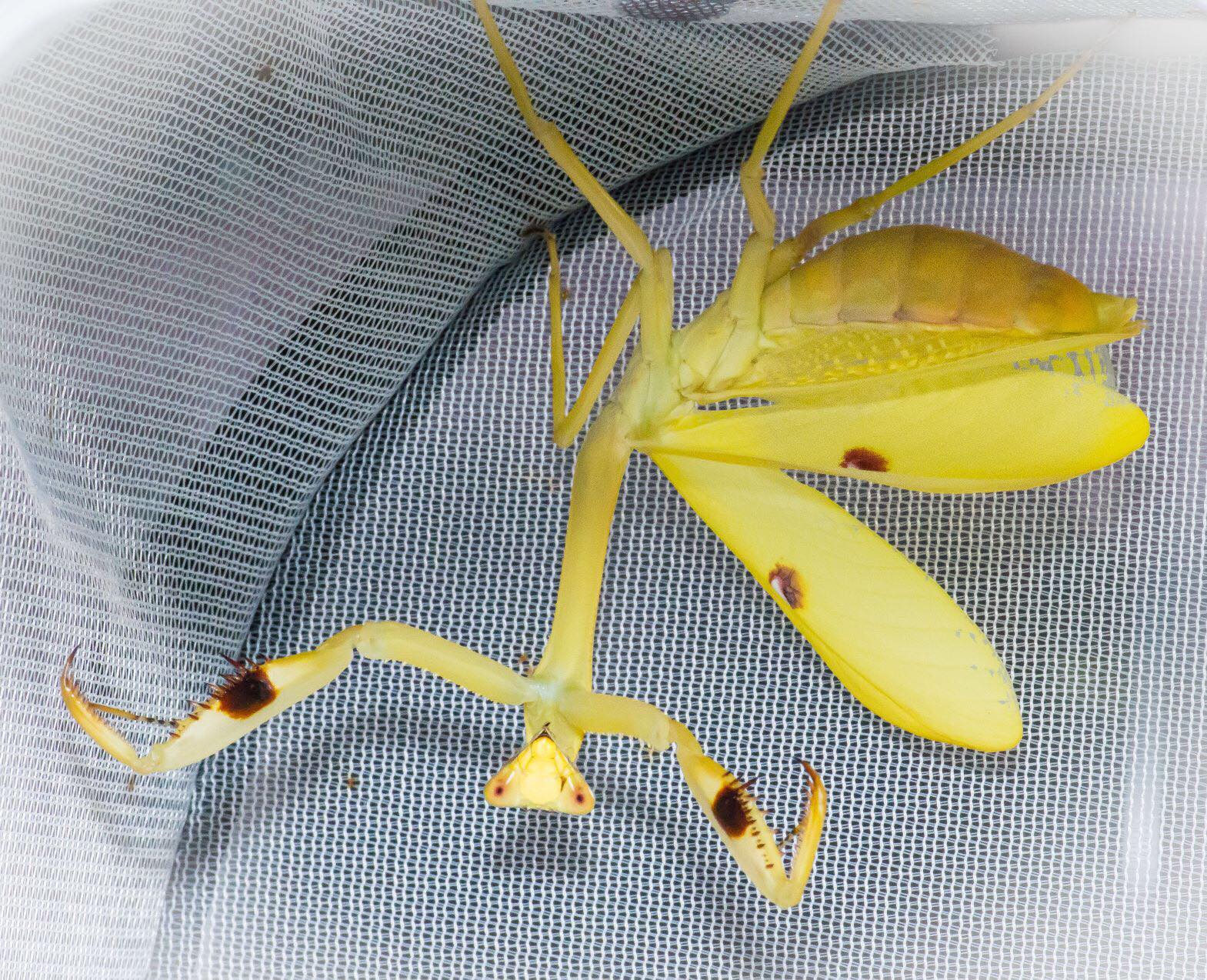
Stagmatoptera femoralis is a large South American mantis known in the hobby as the South American Spotted Eye or Black Spot Mantis. Adults can reach around 9–10 cm. Provide tall, stable foliage and secure overhead grip for its hanging moults. Maintain warm, moderately humid conditions while allowing good air exchange. Use live prey of a sensible size, and keep separately from other mantids. Exact field-habitat details and lifespan figures are less consistently documented than the species identity, so care ranges should be treated as captive-husbandry guidance.
PRACTICAL HUSBANDRY
Day-to-day care
Diet & prey
Live flying insects such as houseflies, bluebottle flies and moths; suitably sized roaches or locusts may also be offered. Tiny nymphs take fruit flies or other small prey.
Feeding
Offer suitable live prey every 1–3 days for growing nymphs and about 2–3 times weekly for adults, adjusting to abdomen condition and appetite. Remove uneaten insects promptly, particularly during premoult. Do not feed while moulting or until the exoskeleton has hardened.
Enclosure
Tall, well-ventilated enclosure with secure branches, leafy perches and a grippable mesh or textured ceiling for hanging moults. For a 9–10 cm adult, aim for at least 20 cm width and 30 cm clear vertical height; 30 × 30 × 45 cm offers more comfortable moulting space. House individually.
Substrate
A thin layer of coco fibre, organic topsoil or absorbent paper to manage moisture and cleaning. This is a climbing mantis, so floor substrate is secondary to secure hanging and moulting space.
Ventilation
Good cross-ventilation and a breathable upper panel are essential. Maintain humidity without persistent condensation or stale air. Ensure the top supports a secure upside-down moulting grip.
Hydration & misting
Lightly mist foliage or a side wall for drinkable droplets, adjusting frequency to airflow and drying. Allow surfaces to dry between sprays; avoid spraying the mantis directly, especially while moulting.
Handling
May walk onto a hand, but handling is best kept minimal. Avoid falls, sudden movements and contact during premoult or after a moult. Transfer by guiding onto a branch rather than grasping the body.
Sex differences
Adult females are generally broader and heavier-bodied; males tend to be slimmer and more mobile. Abdominal segment counting can help sex older nymphs (typically six visible ventral segments in females, eight in males), but use several traits for confirmation.
ENCLOSURE EXAMPLE · AD · AFFILIATE LINK
Recommended arboreal enclosure
Such as The Spider Shop Acrylic Arboreal Terrarium ↗
An example with size options. Check the selected size, ventilation and security against this species and life stage.
IMPORTANT CONSIDERATIONS
Keeper notes
Never house individuals together as routine care; cannibalism is possible. Moulting failure is a major risk if the enclosure is too short, crowded or excessively wet. Flying and climbing adults can escape quickly. Never release captive mantids outdoors.
BREEDING & LIFE CYCLE
Breeding notes
Solitary and potentially cannibalistic. Pairing requires an adult, well-fed female and careful supervision; males can be eaten. Fertilised females deposit foamy oothecae that harden on branches or other secure surfaces. Incubation requirements and nymph yield are not well established for this species; avoid asserting a fixed hatch time.
SOURCES & FURTHER READING
Check the references
Care can vary by species, life stage and local conditions. Review multiple reputable sources before making husbandry decisions.
KEEP EXPLORING
More mantids
Related completed care guides from the mantids library.