SPECIES CARE GUIDE
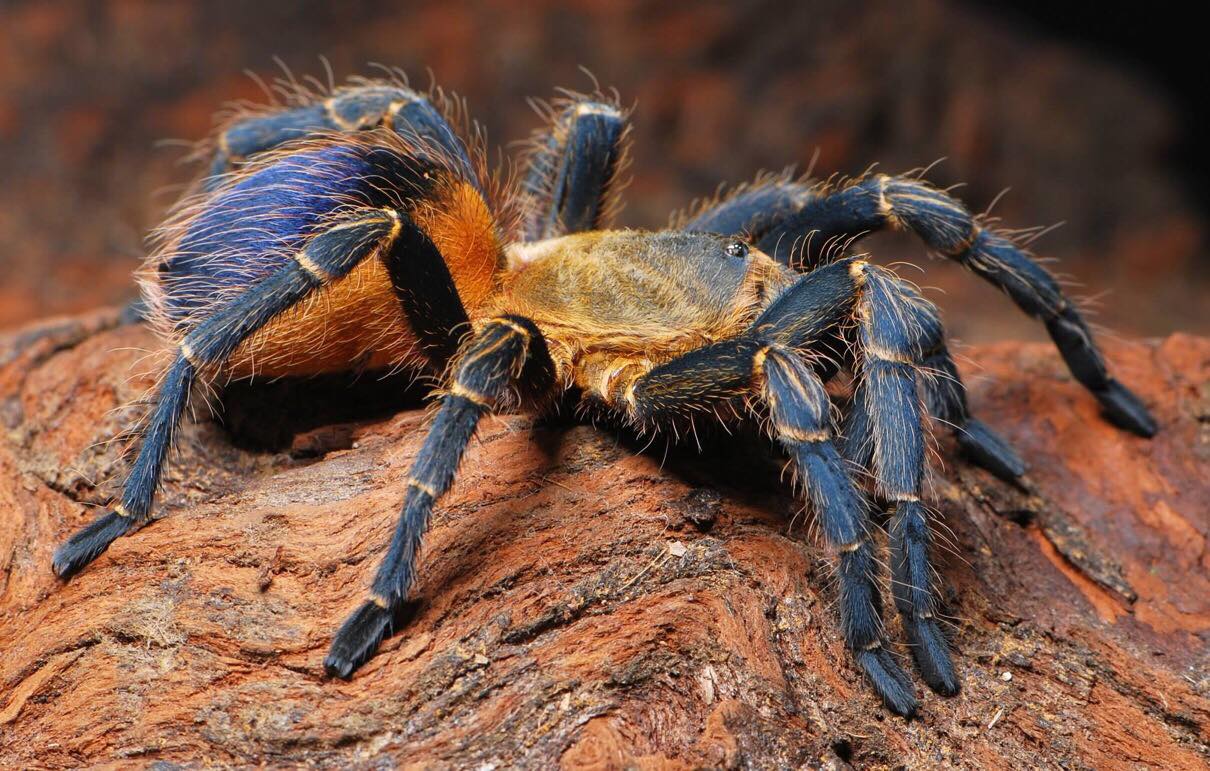
Yellow Blue Bottle
Spinosatibiapalpus sp. “Colombia”
ENVIRONMENT
Core care conditions
Use these ranges as a starting point and adjust for life stage, enclosure ventilation and observed behaviour.
HUSBANDRY OVERVIEW
At a glance
- Taxonomic group
- Arachnida
- Origin
- Colombia
- Lifestyle
- Terrestrial / heavy webbing
- Adult size (diagonal leg span)
- 7–10 cm
- Temperament
- Skittish
- Experience level
- Intermediate
- Visibility
- Mostly hidden
- Burrowing
- Heavy burrower
- Growth rate
- Fast
- Urticating hairs
- No
- Venom
- Mild
- Tarantula region
- New World
- Male lifespan
- 2–3 years
- Female lifespan
- 8–10+ years
CARE NOTES
Keeping considerations
Provide plenty of anchor points (cork bark or fake foliage) for their extensive webbing. Keep lower substrate layers damp and watch for lightning-fast reflexes during rehousing.
PRACTICAL HUSBANDRY
Day-to-day care
Diet & prey
Pinhead crickets, flightless fruit flies, small roaches, and micro-crickets scaled to size
Feeding
Spiderlings: every 2–3 days. Juveniles: 2 times per week. Adults: once a week or every 10–14 days. Remove uneaten prey promptly.
Enclosure
Terrestrial setup with good horizontal floor space (at least 3x to 4x DLS) and secure ventilation to prevent escapes.
Substrate
5 to 10 cm of moisture-retentive, clean substrate like coco fiber, peat moss, or topsoil.
Ventilation
Good cross-ventilation to prevent stagnant air and mold growth.
Hydration & misting
Keep a shallow water dish filled with fresh water at all times. Maintain a moisture gradient by keeping lower substrate layers slightly damp.
Handling
Not recommended for handling due to incredible speed and nervous disposition; best enjoyed as a display and web-building exhibit animal.
Sex differences
Mature males feature tibial hooks on their front legs and a bulbous palpal organ on the pedipalps, with a shorter lifespan.
IMPORTANT CONSIDERATIONS
Keeper notes
Extremely fast and unpredictable when startled; secure the enclosure during maintenance.
BREEDING & LIFE CYCLE
Breeding notes
Females can construct an egg sac a few weeks to months after successful pairing. Provide ample hides and ensure the female is well-fed.
SOURCES & FURTHER READING
Check the references
Care can vary by species, life stage and local conditions. Review multiple reputable sources before making husbandry decisions.
KEEP EXPLORING
More tarantulas
Related completed care guides from the tarantulas library.